The moment a loved one comes home after a stroke, everything can feel different. The house looks the same, but the routines, the roles, and the responsibilities have shifted overnight. Many families across the UK describe that first week at home as one of the most uncertain periods they have ever faced full of love and determination, but also fear, exhaustion, and questions that nobody seems to have clear answers to.
If you are in that moment right now or preparing for it, this guide is for you.
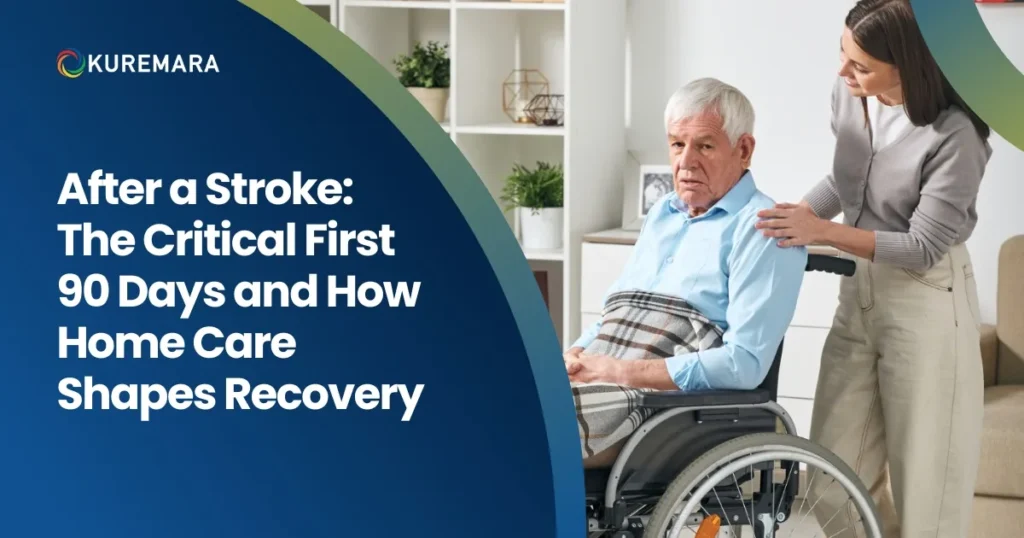
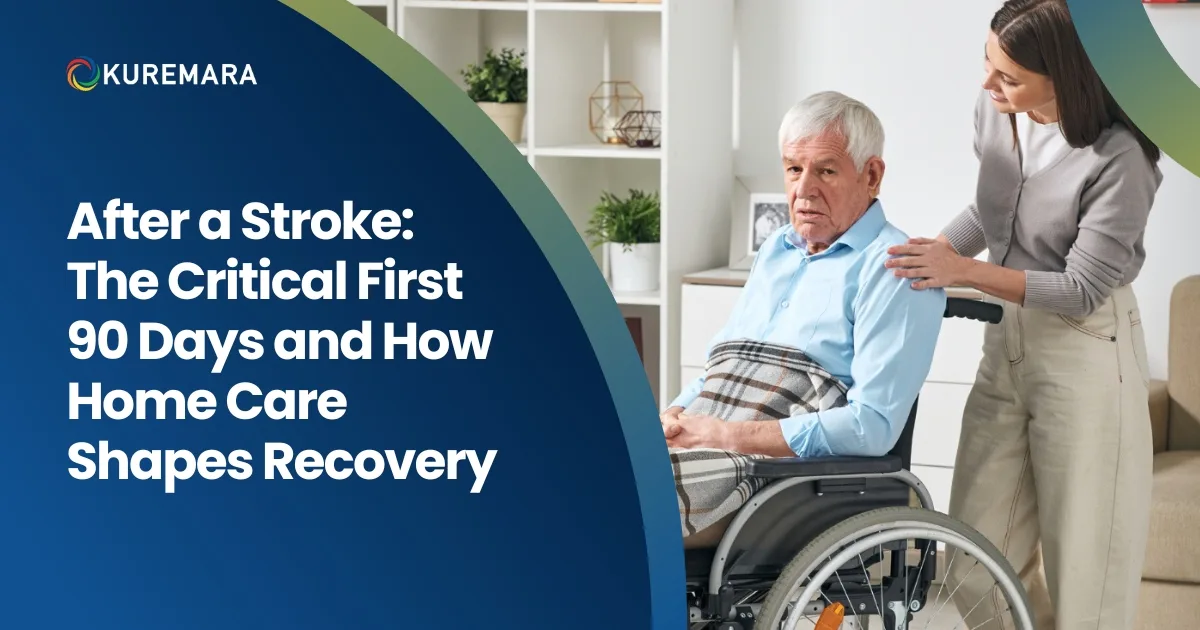
Recovery from stroke is not a single event. It is a process, and the first 90 days are widely recognised as the most critical window in that process. How this period is managed particularly in the home environment can significantly influence long-term outcomes. This guide explores the stroke recovery timeline, the key stroke recovery stages your loved one may move through, and how the right stroke recovery care at home can make a genuine difference.
In the UK, around 100,000 people have a stroke each year, and approximately 1.3 million people are currently living with the effects of stroke, according to the Stroke Association. Behind every one of those statistics is a family, a carer, and a person working hard to rebuild their lives. You are not alone in this.
Why the First 90 Days Matter So Much
After a stroke, the brain begins a process of repair and reorganisation known as neuroplasticity. In simple terms, the brain attempts to reroute functions that were disrupted by the stroke, finding new neural pathways to restore movement, speech, and cognition. This ability to adapt is strongest in the early weeks and months following a stroke, which is why the first 90 days are so significant.
This does not mean that recovery stops after 90 days; many people continue to make meaningful progress for months and even years. However, the early period is when consistent rehabilitation input has the greatest potential to influence long-term recovery, and it is the time when the support environment at home matters most.
In England, the NHS provides Early Supported Discharge (ESD) schemes for eligible stroke survivors, enabling them to return home sooner with a package of community therapy. However, NHS therapy input is time-limited. Once those sessions reduce or end, professional home care steps in to bridge the gap; maintaining the routines, safety, and consistency that underpin recovery.
A note for family carers
If you are a partner, adult child, or close friend taking on the role of carer, your wellbeing matters too. Unpaid carers in the UK provide enormous support but caring without breaks is not sustainable. Professional home care is not a replacement for your love and presence. It is a partner to it.
Understanding the Stroke Recovery Stages
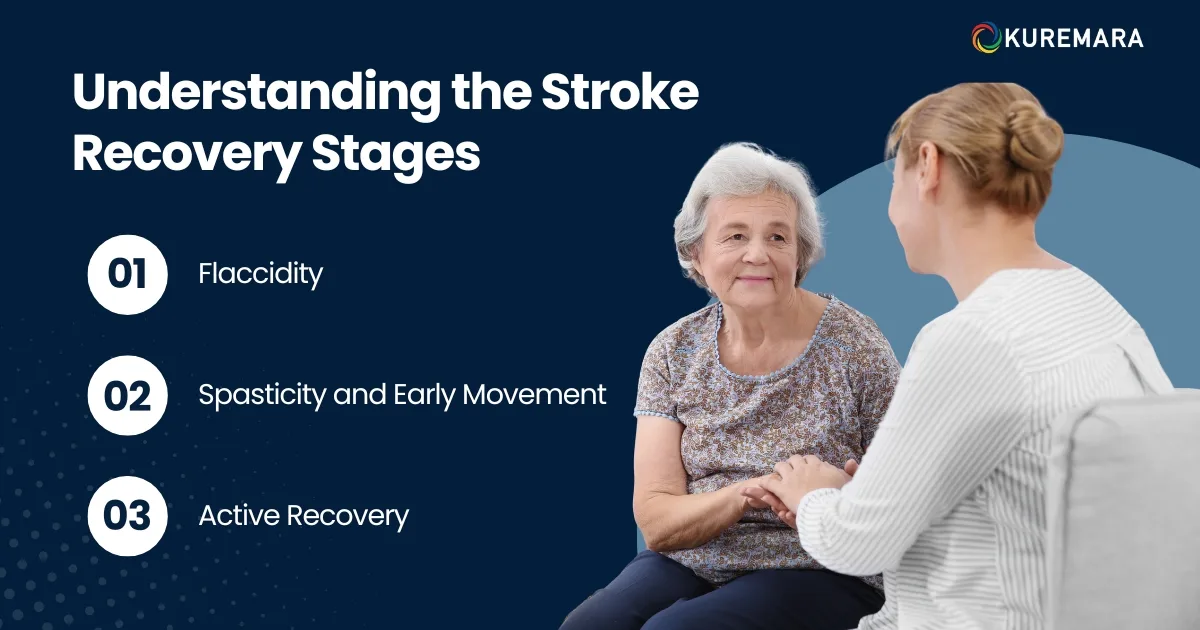
No two strokes are the same, and no two recoveries follow an identical path. The type of stroke, the area of the brain affected, the person’s overall health, and the speed of initial treatment all influence how recovery unfolds. That said, clinicians often describe recovery in broad stages, which can help families understand what to expect and what kind of support is most useful at each point.
Stage 1 — Flaccidity (Days 1 to 7 post-stroke)
In the immediate period after a stroke, affected muscles may be completely without tone or strength, a state known as flaccidity. At this stage, the priority is safety: positioning to prevent pressure sores, supporting safe swallowing, and careful handling during any movement. For those returning home at this stage, professional carers trained in post-stroke personal care are essential.
Stage 2 — Spasticity and Early Movement (Weeks 1 to 4)
As the brain begins to reorganise, muscle tone often returns, sometimes in ways that feel stiff or rigid, known as spasticity. This stage can be physically and emotionally challenging. Carers who understand the importance of gentle, therapy-aligned movement and who can support consistent daily routines play a key role in reinforcing the work being done by NHS physiotherapists and occupational therapists.
Stage 3 — Active Recovery (Weeks 4 to 12)
This is typically the most rapid phase of recovery from stroke. Improvements in movement, speech, and daily function can happen week by week. Consistent, structured support at home aligned with the goals set by the rehabilitation team can make this period as productive as possible. Routines matter enormously here: regular mealtimes, sleep schedules, mobility practice, and medication management all contribute to recovery.
Emotional Recovery — Ongoing Throughout
Stroke affects more than the body. Depression and anxiety are experienced by up to one-third of stroke survivors, and the emotional impact on family members is equally significant. The psychological dimension of recovery is sometimes given less attention than physical rehabilitation, but it is just as important.
A consistent, familiar carer, someone who knows your loved one’s preferences, personality, and history provides continuity that is deeply comforting. Companionship, respectful conversation, and emotional attunement are not extras in post-stroke care. They are part of the care itself.
It is also important to recognise that recovery is rarely linear. There may be days of real progress followed by days of fatigue or frustration. This is a normal part of the process and does not signal failure. Patience, both from the stroke survivor and from those around them, is one of the most valuable things in the room.
A Practical Stroke Recovery Timeline: Week by Week
To help families understand what to expect, here is a general stroke recovery timeline for the first 90 days at home. Remember that every person’s journey is unique; this is a guide, not a guarantee.
Timeline | Focus of Recovery | How Home Care Helps |
Weeks 1–2 | Settling home safely; acute fatigue management; medication routines; first GP follow-up | Personal care, home safety monitoring, medication prompting, emotional reassurance |
Weeks 3–4 | Establishing daily routines; working alongside NHS physiotherapy and speech therapy; monitoring mood | Carer-assisted movement and exercises; meal preparation; companionship; family respite |
Weeks 5–8 | Building on functional gains; increasing independence in daily tasks with supported stepping back | Graduated support — doing with, not doing for; fall prevention; engaging in social activity |
Weeks 9–12 | Reassessment of care needs; celebrating milestones; planning longer-term care if required | Review and adapt care plan; introduce overnight cover if needed; prepare transition plan |
Throughout all stages, open communication between the care team, the NHS rehabilitation team, the stroke survivor, and their family is essential. At Kuremara, care plans are built collaboratively because no one understands a person’s needs better than the people who love them.
How Home Care Directly Shapes Stroke Recovery
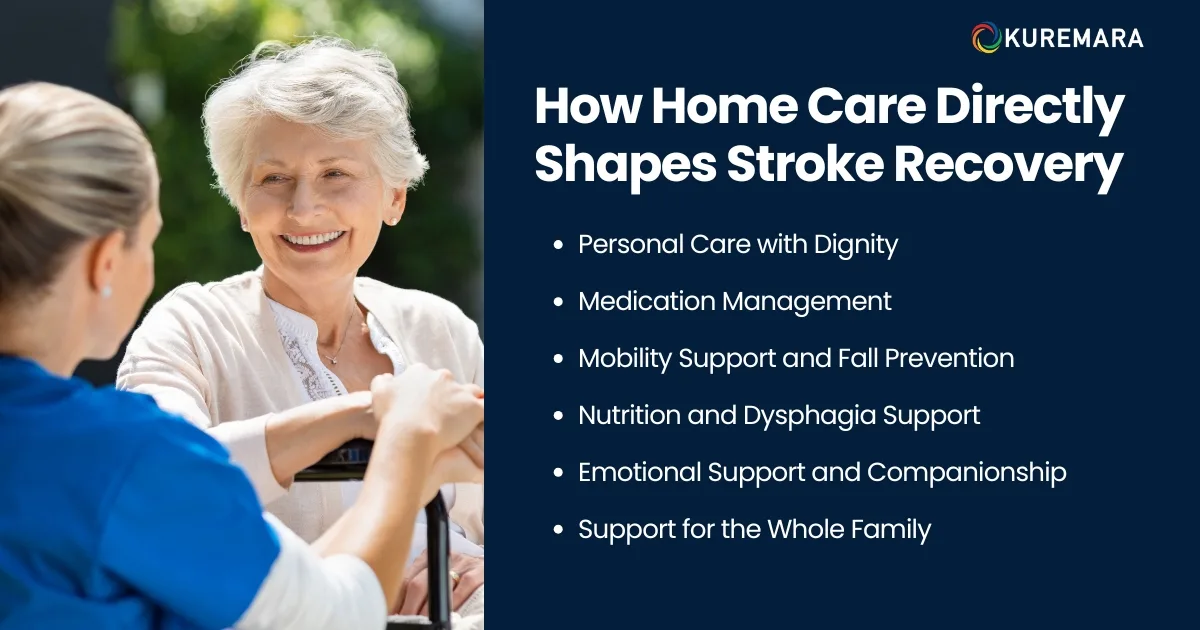
Research consistently shows that most people prefer to recover at home and that familiar environments can support better outcomes. Stroke recovery care delivered at home is not simply about assistance with daily tasks. It is about creating the conditions in which recovery can happen.
a. Personal Care with Dignity
Bathing, dressing, and personal hygiene can become significant challenges after a stroke. A skilled carer supports these tasks in a way that preserves the person’s dignity and respects their choices whether that means allowing more time, adapting techniques to physical limitations, or simply following the routine the person has always preferred.
b. Medication Management
Post-stroke medication regimens are often complex, including anticoagulants and blood pressure medicines that must be taken consistently and correctly. A carer can provide prompts, monitor for side effects, and liaise with the GP or pharmacist where needed, reducing the risk of complications.
c. Mobility Support and Fall Prevention
Falls are one of the most common and serious risks for stroke survivors in the home environment. Trained carers assist with safe transfers, use of mobility aids, and adapted movement through the home. They can also identify and flag environmental risks, a loose rug, a poorly lit stairway that increase fall hazard.
d. Nutrition and Dysphagia Support
Stroke can affect swallowing a condition known as dysphagia, which requires careful attention to food and drink preparation. Carers can prepare meals that meet dietary requirements and swallowing guidelines, and monitor for signs of difficulty that should be escalated to a healthcare professional.
e. Emotional Support and Companionship
Social isolation is a significant risk factor for poor recovery outcomes, and it disproportionately affects those living alone or in areas with limited community provision. A carer who builds a genuine relationship with the stroke survivor who listens, engages, and treats them as a whole person provides something that cannot be quantified but must not be underestimated.
f. Support for the Whole Family
Stroke does not happen to one person. It happens to a family. Respite care and overnight cover give family carers the protected time they need to rest, maintain their own health, and be present as a loved one not just as a carer. This is not a luxury. It is a necessary part of a sustainable care arrangement.
Choosing the Right Type of Home Care After Stroke
The right care arrangement will depend on the severity of the stroke, the person’s level of independence, the availability of family support, and housing circumstances. At Kuremara, we work with families to assess need and build a care plan that is genuinely tailored not a one-size package applied to everyone.
- Hourly Visiting Care: Ideal for stroke survivors with some independence who need structured support at set times, for example, morning personal care, lunchtime meal preparation, or evening medication.
- Live-In Care: For those with significant physical, communication, or cognitive effects who need continuous presence and support throughout the day and night.
- Overnight Care: For those at risk of nocturnal falls, disorientation, or with medication needs during the night, providing peace of mind for both the survivor and their family.
- Complex Care: Nurse-led specialist support for stroke survivors with more complex neurological or medical needs that require clinical input at home.
- Respite Care: Planned breaks for family carers, with a trusted professional stepping in to maintain routines and continuity.
- Companionship Care: Social and emotional support for those whose primary need is connection, engagement, and company at home.
All Kuremara care plans are reviewed regularly and adapted as the person’s needs change across the stroke recovery timeline. Recovery is dynamic, and care should be too.
Funding Stroke Recovery Care in the UK
Cost is often one of the first things families think about, and rightly so. The good news is that there are several routes to funded or part-funded care in England that stroke survivors and their families should be aware of.
1. NHS Continuing Healthcare (CHC)
If a person’s primary care need is health-related, as is often the case following a serious stroke, they may be eligible for NHS Continuing Healthcare. A CHC assessment is carried out by a clinical team and, if eligibility is confirmed, the NHS funds the full cost of care. It is worth requesting an assessment as early as possible.
2. Local Authority Care Assessment
If CHC is not awarded, a local authority care assessment determines what support the council will fund, based on need and financial means. Your local adult social services team can arrange this. Following an assessment, a personal budget may be awarded that can be used to purchase care from a provider such as Kuremara.
3. Personal Independence Payment (PIP) and Attendance Allowance
Stroke survivors of working age may be eligible for Personal Independence Payment (PIP). Those over State Pension age may qualify for Attendance Allowance. Both benefits can contribute towards the cost of care and are not means-tested; they are based on need.
4. Self-Funding
Some families choose to fund care privately, either while awaiting a CHC or local authority decision, or because they do not meet the financial thresholds for public funding. Kuremara works transparently on pricing and can help families understand their options. Direct payments from a local authority can also be used to purchase care directly from us.
For a detailed overview of costs and funding options, visit our Costs and Funding page at kuremara costs-funding, or speak to a member of our team who can guide you through the options without obligation.
The Right Support Changes Everything
The first 90 days after a stroke are among the most important and most challenging days a family will face together. They are also a period of genuine possibility. The brain’s capacity to adapt, and the human spirit’s capacity to persevere, can produce outcomes that feel remarkable.
What matters most in this window is not perfection; it is consistency, dignity, and the right support. Whether that means a carer visiting for two hours each morning, someone present around the clock, or a trusted professional giving a family carer the break they desperately need, the right arrangement looks different for every person and every family.
At Kuremara, we are a CQC-registered home care provider delivering person-centred care across England. We understand that stroke recovery is not a clinical checkbox; it is a deeply human experience. Our care plans are built around real lives, real needs, and real relationships. We work alongside NHS teams, family carers, and stroke survivors themselves to provide care that fits, adapts, and genuinely helps.