Mental wellness refers to a person’s ability to cope with everyday life, stay emotionally balanced, maintain meaningful relationships, and feel able to grow and contribute. In the UK, mental wellness is increasingly understood as more than the absence of illness. It’s a dynamic state of wellbeing shaped by daily habits, connection, and support.
While basic self-care practices such as rest, hydration and breaks are essential, going beyond the basics can make everyday life more manageable and meaningful. Supportive routines, social connection, workplace culture, and compassionate habits help build resilience long before stress becomes overwhelming.
This guide explores how everyday care can strengthen mental wellness at home, in the community, and within relationships. It also covers mindset habits, when to seek help, and simple micro-steps you can start today.
Understanding Mental Wellness
What Does Mental Wellness Mean?
Mental wellness is about feeling equipped to manage daily challenges, realise your potential, build healthy relationships, and contribute to your community. According to Mind and the Mental Health Foundation, mental wellness includes:
- Feeling emotionally balanced
- Being able to cope with life’s stresses
- Maintaining positive relationships
- Participating meaningfully in work or community life
It focuses on strengths, resilience, and overall wellbeing rather than labels or conditions.
Why Everyday Care Matters
Mental wellness isn’t maintained through occasional self-care alone. Research from the Mental Health Foundation highlights that prevention and daily habits play a key role in long-term wellbeing. Small, consistent behaviors; such as connecting with others, staying active, and balancing screen time, help reduce stress, stabilise mood, and support emotional resilience.
Challenges & Opportunities
The UK faces unique pressures: cost-of-living strain, work-related stress, limited social time, and increased isolation. At the same time, the UK provides access to structured support such as the Improving Access to Psychological Therapies (IAPT) programme (GOV.UK), community mental health services and workplace initiatives.
Everyday supportive behaviours complement not replace these professional services. Together, they create a more sustainable, holistic foundation for wellbeing.
Everyday Care at Home and Lifestyle Habits
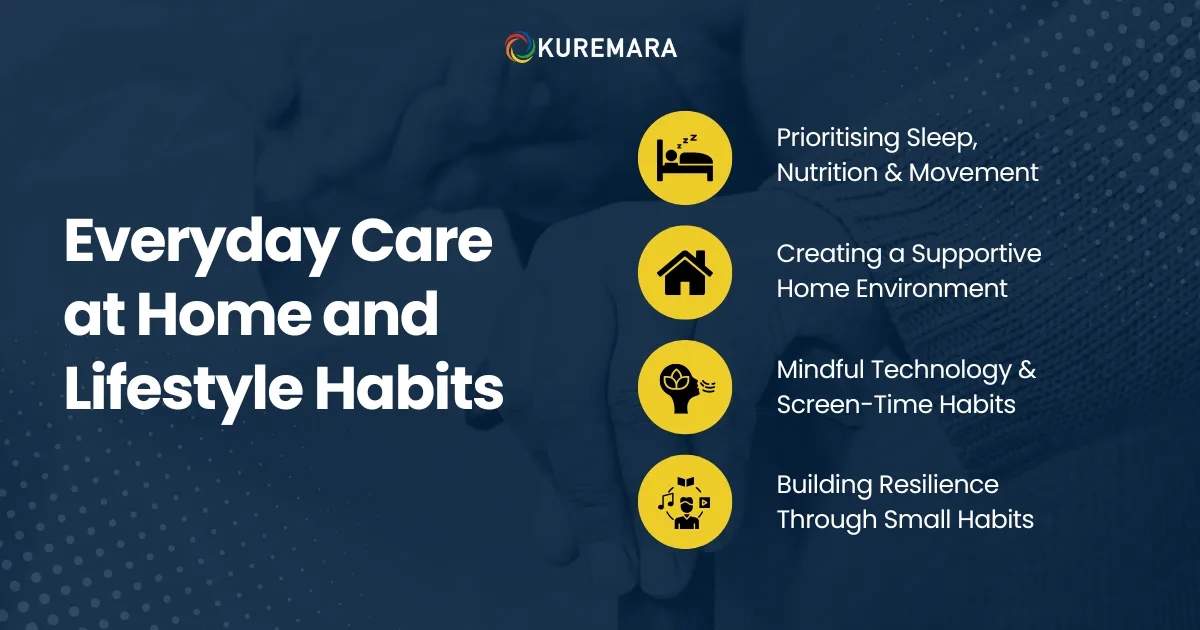
1. Prioritising Sleep, Nutrition and Movement
Physical and mental health are deeply connected. Health guidance widely recognised across the UK highlights the importance of good sleep, balanced nutrition, and regular movement to support emotional and physical wellbeing.
This may include:
- Keeping a consistent sleep schedule
- Eating nutrient-rich foods
- Including daily movement, even if it’s a short walk
- Staying hydrated throughout the day
2. Creating a Supportive Home Environment
Your home environment directly influences your mental state. Small changes can create calm and clarity:
- A designated wind-down routine before bed
- Tech-free or low-tech zones
- Clutter-free spaces to reduce overwhelm
- Soft lighting or relaxing music in the evenings
A supportive home doesn’t require expensive changes, just small thoughtful adjustments.
3. Mindful Technology & Screen-Time Habits
Digital overstimulation can increase anxiety, stress, and fatigue. Creating healthier tech habits can support mental ease:
- Taking short breaks during screen-heavy days
- Setting limits for social media scrolling
- Reducing exposure to constant news
- Turning off notifications during rest periods
4. Building Resilience Through Small Habits
Learning new skills, exploring hobbies and developing everyday capabilities fosters a sense of progress and purpose. Many UK wellbeing frameworks encourage activities such as reading, crafts, baking, or creative projects as tools for emotional resilience.
Social Connection, Community & Work Life
a. The Power of Connection and Belonging
Humans thrive through connections. According to NHS guidance, talking openly about mental wellness, staying connected to friends, and reaching out to family or colleagues can significantly improve emotional wellbeing.
b. Cultivating Supportive Work and Community Spaces
Many UK workplaces now offer wellbeing days, employee assistance programmes, and mental health champions. Community initiatives, including social prescribing, connect people to local clubs, walks, arts groups, and more.
c. Volunteering, Giving Back and Purpose
Giving time to others can create meaning. Contribution and kindness are strongly linked with improved mood, reduced loneliness, and greater life satisfaction.
d. Addressing Isolation and Supporting Vulnerable Groups
Isolation affects students, older adults, carers, migrants, and those living alone. Practical ways to stay connected include:
- Joining local community groups
- Scheduling regular catchups
- Joining online or in-person interest groups
- Accessing befriending services through charities
Mindset, Self-Compassion & Everyday Psychological Care
1. Practising Mindfulness and Being Present
The NHS “five steps to mental wellbeing” recommends paying attention to the present moment. Mindfulness helps reduce overthinking and increases emotional clarity.
2. Self-Compassion and Realistic Expectations
Being kind to yourself, acknowledging that ups and downs are normal, and letting go of perfectionism are essential parts of mental wellness. A compassionate mindset builds inner safety and reduces self-criticism.
3. Stress Awareness and Boundary Setting
Noticing early signs of stress fatigue, irritability, and difficulty concentrating helps, prevent escalation. Setting boundaries at home and work, such as saying no when overwhelmed, protects long-term wellbeing.
4. Building Mental Wellness Habits, Not One-Off Fixes
Mental wellness is a routine, not a one-time practice. Small, intentional habits performed consistently help maintain balance, just as regular exercise supports physical health.
When Everyday Care Alone Isn’t Enough – Recognising and Acting
* Signs It May Be Time to Seek Professional Help
If someone begins experiencing prolonged low mood, anxiety, withdrawal, or noticeable changes in daily functioning, it may be a sign that additional support could be helpful. At Kuremara UK, we encourage individuals and families to pay attention to these early indicators so that support can be arranged before challenges escalate. Our care teams are trained to recognise subtle changes in behaviour, mood or routine and gently raise concerns, ensuring that no one feels alone during difficult periods.
* What Help Is Available in the UK?
Across the UK, individuals can access:
- Public health and wellbeing services
- Psychological support pathways
- Local counselling or peer support groups
- Community mental health programmes
- Helplines and crisis support resources
* Combining Everyday Care with Professional Support
Everyday care at home, works best when paired with professional mental health support where needed. Kuremara UK’s role is to provide steady, compassionate daily assistance from building healthy routines to offering companionship, reassurance, and practical help, while external clinical professionals offer specialised guidance. This combined approach ensures individuals receive holistic, continuous support that nurtures both emotional and physical wellbeing.
* Reducing Stigma and Normalising Conversation
Kuremara UK is committed to fostering open, judgement-free conversations about emotional wellbeing. Our care philosophy emphasises kindness, dignity and understanding, helping individuals feel comfortable discussing how they feel without fear of stigma. By creating safe spaces at home, encouraging honest communication and gently promoting wellbeing awareness, we help normalise conversations around mental wellness across UK communities.
Practical Everyday Checklist & Action Plan
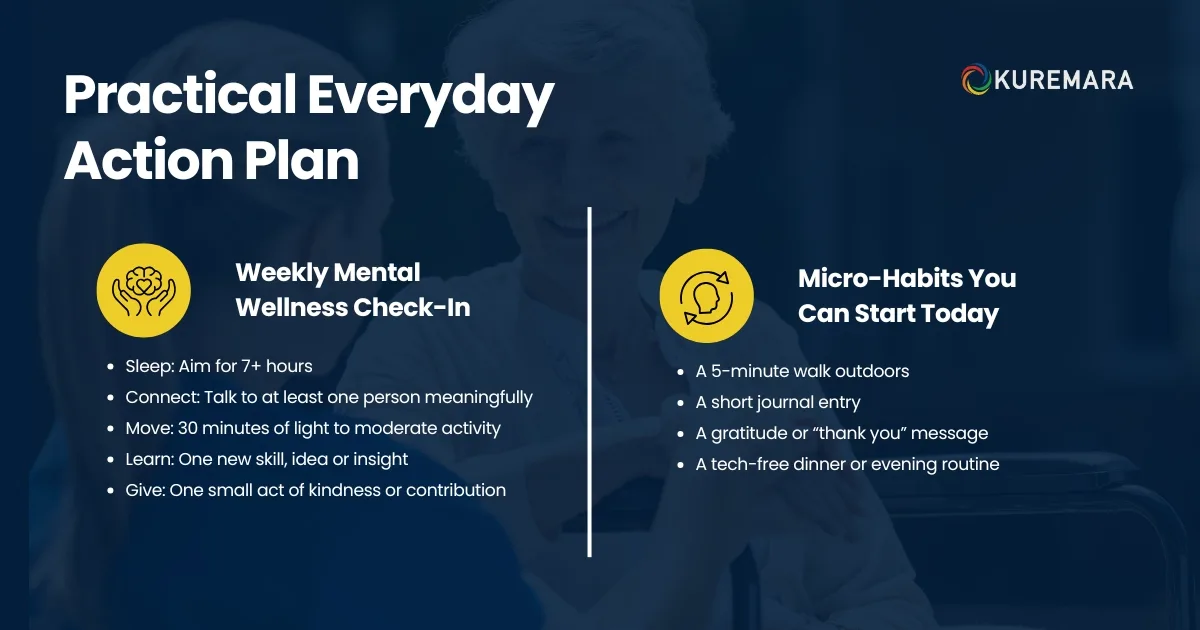
1. Weekly Mental Wellness Check-In
Use this simple list:
- Sleep: Aim for 7+ hours
- Connect: Talk to at least one person meaningfully
- Move: 30 minutes of light to moderate activity
- Learn: One new skill, idea or insight
- Give: One small act of kindness or contribution
2. Micro-Habits You Can Start Today
- A 5-minute walk outdoors
- A short journal entry
- A gratitude or “thank you” message
- A tech-free dinner or evening routine
3. Tailoring for Your UK Context
- Look into local community groups
- Explore nearby parks and green spaces
- Ask your workplace about wellbeing schemes
- Join NHS-supported social prescribing options
4. Reviewing and Adjusting the Plan
Check in with yourself monthly. What’s working well? What isn’t? Adjust your routine with compassion and flexibility.
Kuremara UK: Here to Support Your Wellbeing, Every Day
At Kuremara UK, we believe that mental wellness starts with feeling safe, supported and understood in your own home. Our compassionate care teams are committed to helping individuals build healthier routines, stay connected, manage daily tasks, and feel more confident in their wellbeing journey. Whether you or your loved one needs companionship, emotional reassurance, structured daily support, or guidance navigating available services, we are here to help.
If you’re looking for reliable, person-centred home care that prioritises both physical and emotional wellbeing, we’d be honoured to support you.