Home care in the United Kingdom has evolved far beyond the traditional model of task-based support. Today, families are seeking flexible, compassionate, and highly personalised care options that allow loved ones to remain independent in the comfort of their own homes. As a CQC-registered provider, Kuremara offers a diverse range of home care services designed to meet the emotional, physical, and medical needs of people across the UK.
This guide simplifies the different types of support available and helps families understand which home care approach is right for their situation.
Understanding the Role of Home Care Services
Home care (also known as domiciliary care) enables adults, older people, and individuals with long-term conditions to receive support without moving into a residential facility. Unlike traditional types of care homes that require relocation, home care ensures people stay in familiar surroundings, with continuity of routine and community connection. Care is delivered by trained support workers who follow strict CQC guidelines, ensuring safety, dignity, and consistency.
Home care includes a broad range of assistance, from emotional companionship and daily living support to advanced clinical care. This variety means every individual can receive exactly the support they need, whether it’s an hour a day or round-the-clock live-in care.
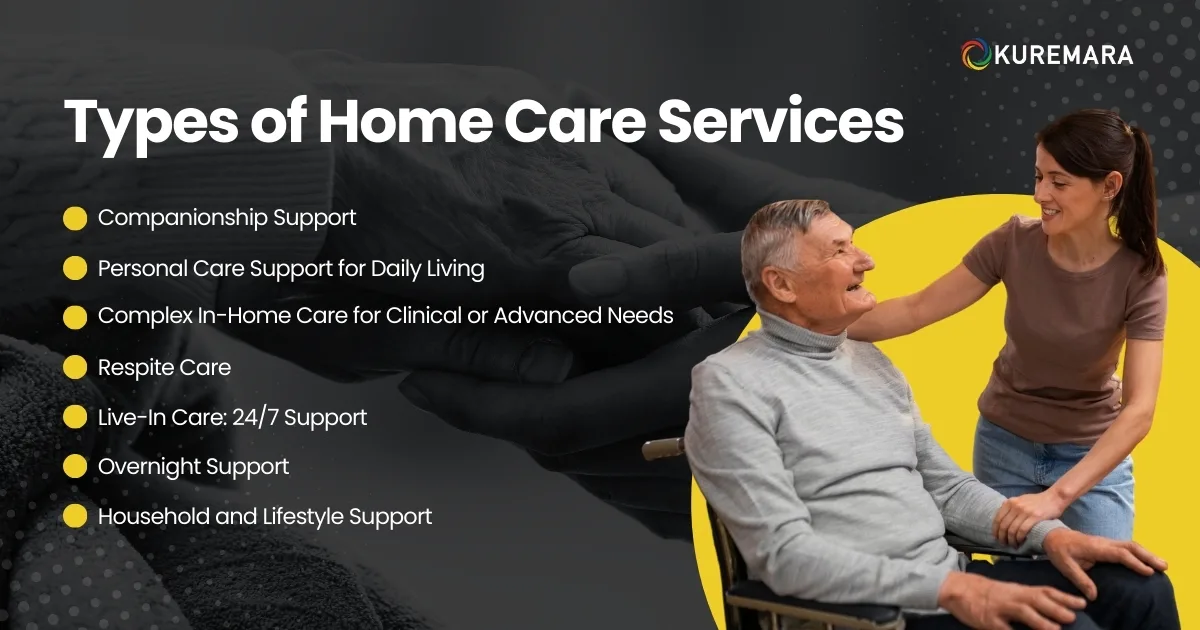
Companionship Support: Reducing Loneliness and Improving Emotional Well-Being
For many individuals, especially older adults or people living alone, loneliness is one of the biggest challenges of daily life. Companionship support focuses on creating meaningful interactions and providing emotional comfort. It may include:
- Friendly conversation and regular check-ins
- Support during walks, hobbies, or community activities
- Encouragement for social engagement
- Help with technology, letters, or organising household tasks
- Accompaniment to appointments or outings
This form of support can be life changing. It fosters motivation, boosts confidence, and improves mental well-being, especially for those dealing with isolation, bereavement, or low mood.
Kuremara offers gentle, person-centred services such as companionship care at home, ensuring individuals never feel alone in their daily routines.
Personal Care Support for Daily Living
Personal care services are the most common type of daily assistance provided through home care. These services maintain dignity, confidence, and independence by helping individuals manage essential activities such as:
- Bathing, grooming, and dressing
- Toileting and continence support
- Morning and evening routines
- Medication prompting or administration
- Mobility assistance and safe transfers
- Meal preparation and monitoring nutrition
These services are especially beneficial for people living with mobility issues, long-term health conditions, or age-related changes. The focus is always on dignity, carers support individuals respectfully while encouraging independence whenever possible.
Kuremara’s dedicated team is trained to provide personal care services alongside personal support, ensuring continuity and emotional connection throughout the care journey.
Complex In-Home Care for Clinical or Advanced Needs
Some individuals require more specialised support due to medical conditions or progressive illnesses. Complex care is delivered by highly trained carers with additional clinical knowledge and may include:
- PEG feeding
- Catheter and stoma care
- Oxygen therapy
- Monitoring vital signs
- Wound and pressure area care
- Seizure management
- Support for conditions such as dementia, MS, Parkinson’s, cancer, and spinal injuries
Complex care allows people to continue living at home safely while receiving support that would traditionally require clinical intervention.
Families seeking emotional and clinical reassurance often explore services similar to complex care at home but delivered directly in the comfort of their own residence.
Respite Care: Short-Term Relief for Family Carers
Family members play a crucial role in supporting loved ones, but caregiving is demanding – emotionally and physically. Respite care offers temporary support so families can rest, travel, or manage personal commitments.
Respite may include:
- A few hours of support
- Full-day relief
- Overnight stays
- Multiple days or weeks of temporary care
- Emergency cover if a primary carer becomes unwell
This type of care benefits both the caregiver and the person receiving support. They enjoy continuity, reassurance, and professional assistance while loved one’s recharge.
Choosing the right type of home care services ensures families receive the assistance they need during short-term breaks without compromising the quality of support.
Live-In Care: 24/7 Support Without Leaving Home
Live-in care is the highest level of non-clinical home support available. A carefully matched carer lives in the home and provides continuous assistance throughout the day and night. This option is ideal for:
- Individuals with complex medical conditions
- People with dementia who may wander or become confused
- Adults recovering from surgery
- Those who prefer one-to-one personalised support
- Families wanting to avoid residential care
Live-in care offers safety and stability, allowing people to remain in their familiar environment. It also strengthens personal bonds between the client and the dedicated live-in carer.
When selecting between different care models, families often compare their options to a type of care homes, but live-in care offers far more personalised attention and home comfort.
Overnight Support for Safety and Peace of Mind
Night-time can be challenging for people with certain conditions such as dementia, anxiety, mobility issues, or disrupted sleep patterns. Overnight care includes:
Sleeping Nights
The carer rests but is available if needed.
Waking Nights
The carer remains awake throughout the night to provide ongoing assistance.
This form of support enhances safety, reduces the risk of falls, and ensures that individuals never feel alone during the night.
Household and Lifestyle Support
Beyond emotional and physical care, home care services also include practical assistance such as:
- Light housekeeping and cleaning
- Laundry and linen changes
- Shopping and errands
- Prescription pick-ups
- Meal planning and organisation
- Help managing appointments
- Companionship during local outings
These tasks help people maintain independence and a comfortable lifestyle.
Condition-Specific Home Care Services
Kuremara provides personalised support for individuals living with specific conditions. These services involve tailored care plans, risk assessments, and ongoing reviews to ensure people receive the right assistance.
Thematic areas include:
- Dementia care
- Multiple Sclerosis care
- Parkinson’s care
- Cancer care
- Palliative and end-of-life care
Trained support workers work closely with families and healthcare teams to ensure continuity and comfort.
How to Choose the Right Home Care Option
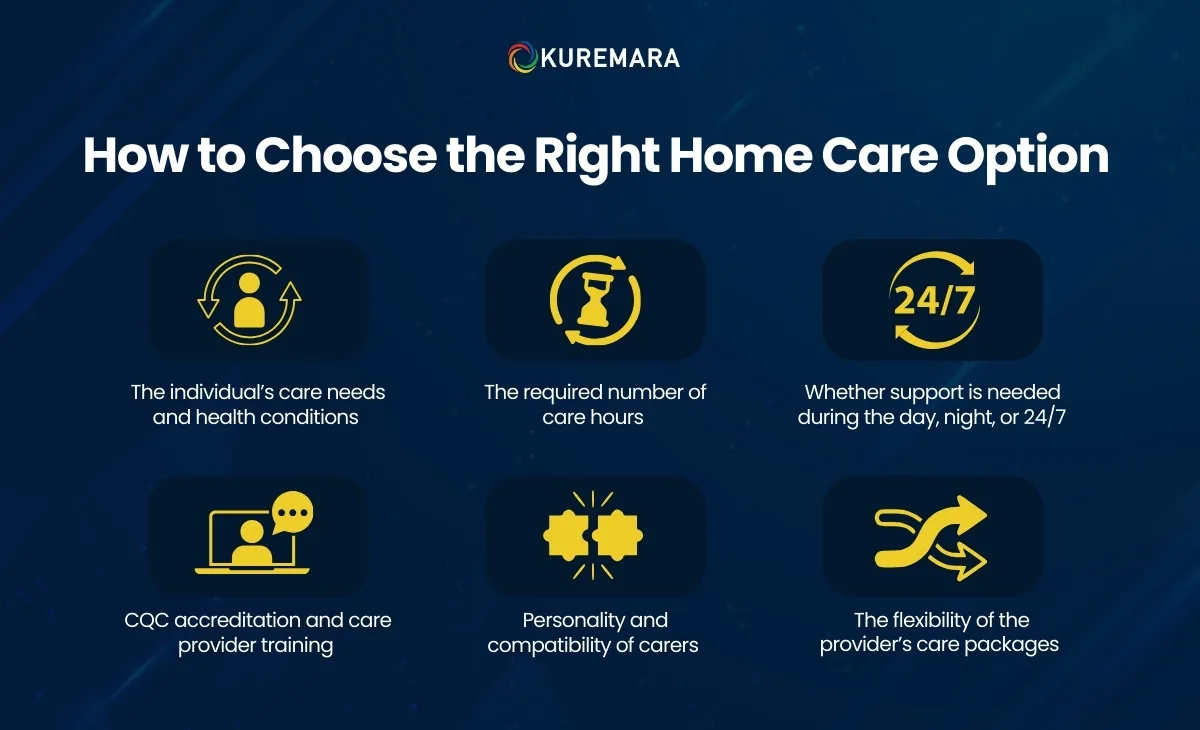
Families often feel overwhelmed when choosing support for a loved one. Key considerations include:
- The individual’s care needs and health conditions
- The required number of care hours
- Whether support is needed during the day, night, or 24/7
- CQC accreditation and care provider training
- Personality and compatibility of carers
- The flexibility of the provider’s care packages
Kuremara’s team offers guidance to help families make informed decisions based on real needs, goals, and lifestyle preferences.
Why Families Across the UK Trust Kuremara
As a CQC-registered provider, Kuremara is committed to delivering safe, compassionate, and highly personalised home care services. Families choose Kuremara because:
- All staff are thoroughly trained and vetted
- Support is centred around personal dignity, choice, and independence
- Care plans are flexible and tailored
- Every visit is delivered with respect, kindness, and professionalism
- Teams specialise in complex care, emotional support, and condition-specific assistance
- Client well-being and safety are always the highest priority
Kuremara prides itself on building trust through consistency, communication, and reliable support.
Final Thoughts
Choosing home care is a deeply personal and often emotional decision. With so many options available; ranging from companionship and personal care to live-in and complex medical support, it’s important for families to understand the full scope of services. By working with a regulated organisation like Kuremara, individuals receive compassionate, high-quality care that empowers them to live safely and confidently at home.