When it comes to finding the right care for your loved ones, there’s one question that often gets asked: What exactly does a home care assistant do—and just as importantly, what can’t they do?
If you’ve never worked with a home care agency before, it’s easy to assume a caregiver can do just about everything. But for the safety and dignity of those receiving care and to protect care assistants themselves, it’s important to understand the role clearly.
At Kuremara, we believe in clarity, compassion, and competency. So let’s clear up the confusion and walk you through everything a home care assistant can (and can’t) do, plus how you can use this knowledge to create a safe, well-rounded care plan.
What Exactly Does a Home Care Assistant Do?
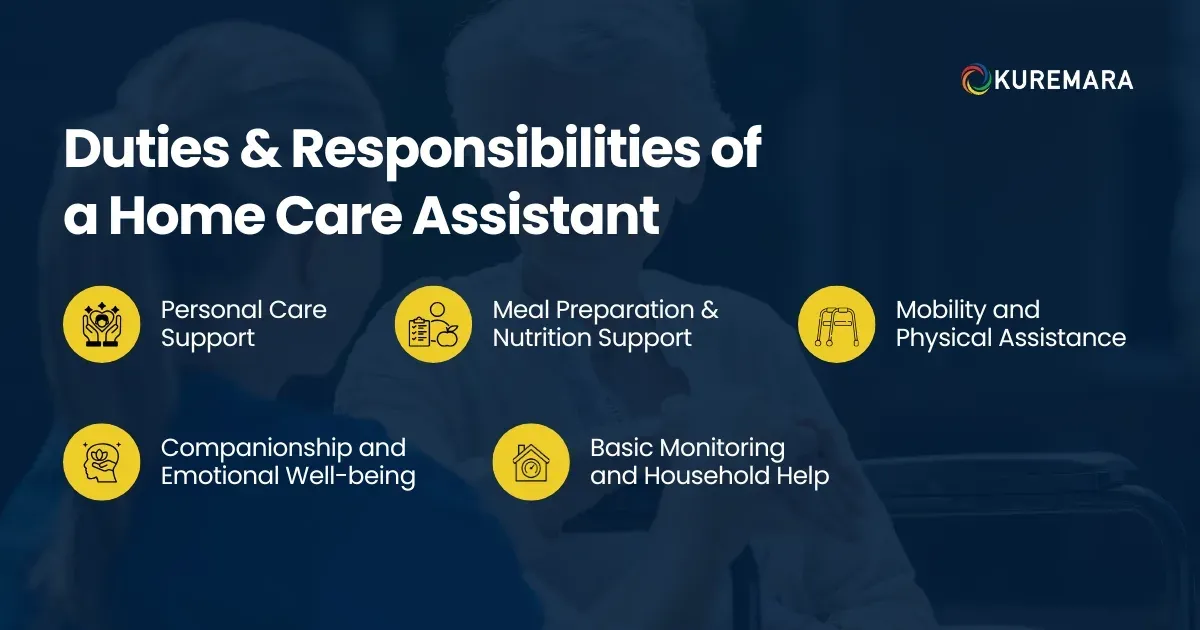
Home care assistants, sometimes called domiciliary carers or support workers, play a vital role in helping individuals remain independent in their own homes. Their responsibilities can vary depending on individual needs, but here are the core areas of support they offer:
1. Personal Care Support
One of the main responsibilities of a home care assistant is helping clients with personal hygiene and daily routines, including:
- Bathing or showering assistance
- Dressing and grooming
- Toileting support
- Helping with incontinence products
- Oral hygiene assistance
This aspect of care is always done with a focus on dignity, consent, and comfort. While they’re not clinical professionals, home care assistants are trained in safe practices to assist without crossing medical boundaries.
2. Meal Preparation & Nutrition Support
Eating well is essential, especially for the elderly or those with health conditions. Care assistants often help with:
- Preparing nutritious meals and snacks
- Assisting with feeding if needed
- Ensuring dietary restrictions are followed
- Monitoring fluid intake to prevent dehydration
They’re not dietitians or cooks per se, but they ensure meals are safe, healthy, and suited to the client’s needs.
3. Mobility and Physical Assistance
Mobility support can make the difference between independence and isolation. A care assistant might:
- Help with walking around the home
- Assist with getting in and out of bed or chairs
- Encourage safe physical movement to prevent stiffness or falls
- Support with using walking frames or wheelchairs
They’ll always be trained in manual handling, using safe techniques and tools (like hoists, if trained) to avoid injury.
4. Companionship and Emotional Well-being
Sometimes, the most powerful thing a home care assistant can offer is human connection. Companionship includes:
- Engaging in conversation and friendly chat
- Playing games or helping with hobbies
- Accompanying clients on short walks or errands
- Offering emotional reassurance during tough times
For people living alone, this emotional care is just as vital as the physical support.
5. Basic Monitoring and Household Help
Care assistants are the eyes and ears on the ground. They help spot early signs that something’s off. Their day-to-day duties might also include:
- Observing and reporting changes in behaviour or appetite
- Recording care activities in a logbook
- Doing light cleaning, laundry, or tidying
- Ensuring the environment is safe (removing trip hazards, etc.)
While they won’t diagnose or treat, they do raise red flags when something doesn’t seem right keeping family and healthcare providers in the loop.
What a Home Care Assistant Can’t Do (and Why)
Now, here’s where some lines are often blurred. It’s essential to understand the limits of what a home care assistant is legally and ethically allowed to do. Let’s break down the no-go zones:
1. Clinical or Medical Procedures
Home care assistants are not nurses, and they cannot perform any clinical or invasive tasks. This includes:
- Giving injections or insulin
- Administering wound care
- Managing catheters or stoma bags
- Changing dressings
- Tube feeding
These duties require trained medical personnel, such as district nurses or specialist teams.
2. Making Medical Judgments
They’re observant, but they’re not doctors. Care assistants should never:
- Diagnose health conditions
- Make medication changes
- Recommend or prescribe treatments
However, they can report issues promptly so the right medical professionals can step in.
3. Financial or Legal Tasks
To protect clients from abuse or conflict of interest, care assistants should never:
- Handle personal finances or bank cards
- Sign legal or financial documents
- Make legal decisions on behalf of the client
Families or legal guardians should manage these aspects separately.
4. Heavy Lifting or Use of Specialist Equipment (Without Training)
Unless specifically trained and insured, a home care assistant is not permitted to:
- Use hoists or lifting equipment unsafely
- Move clients single-handedly when it risks injury
- Handle heavy cleaning or home repair tasks
Kuremara ensures, all staff are trained in safe manual handling protocols, and no one is asked to do tasks beyond their certification.
Why These Boundaries Matter
Let’s be honest, it might feel limiting at first. But these boundaries are in place for very good reasons:
- Client safety: Prevents mishandling of medications or injuries due to untrained procedures
- Legal protection: Ensures compliance with UK regulations (Care Act 2014, CQC standards)
- Better care outcomes: Everyone focuses on their strengths, caregivers provide support, and professionals handle clinical tasks
At Kuremara, we believe in collaboration. If a client’s needs shift, we’ll help coordinate with nurses, occupational therapists, or social workers as needed.
Setting Realistic Expectations for Care Planning
A big part of successful home care? Clear communication and realistic planning. Here’s how to build a care plan that works:
- List specific needs: Hygiene, meals, companionship, mobility; identify the daily gaps
- Identify support roles: Who will provide medical care, financial oversight, transportation?
- Set boundaries early: Let everyone know what’s in-scope and what’s not
- Schedule reviews: Revisit the care plan regularly needs evolve
When in doubt, ask the provider. At Kuremara, our team is happy to walk families through this step-by-step.
How Kuremara Ensures Safe, Quality Home Care
We know you’re trusting us with your loved one’s wellbeing. That’s why we go the extra mile:
- Thorough staff vetting: Enhanced DBS checks, references, and in-depth interviews
- Specialised training: Including dementia care, manual handling, safeguarding, and more
- Personalised care plans: Tailored to each individual’s preferences, habits, and goals
- Regular monitoring: Quality assurance visits and real-time feedback channels
- 24/7 support: Families can contact us anytime with questions or concerns
We don’t just send a carer, we build a support relationship that evolves with your loved one.
Parting Thoughts: Trusting the Right Support System
Choosing a home care assistant shouldn’t feel like guesswork. With the right knowledge and clear expectations, you can build a care plan that empowers your loved one and gives your family peace of mind.
At Kuremara, we’re not just filling shifts; we’re building partnerships based on trust, compassion, and transparency. Whether it’s daily visits or 24/7 care, we’re here to support your journey every step of the way.
Want to learn more about arranging care through Kuremara? Reach out to our team for a free, no-pressure consultation. We’re here to help.