For many older adults, home is more than just a place to live. It’s a space filled with familiarity, memories, and independence. As people age, staying safely at home becomes a priority, but it also comes with increased risks. A sudden boiler breakdown, a burst pipe, or an electrical fault can quickly turn into a serious emergency, especially when mobility or health is limited.
This is where Home Emergency Cover plays an important role. While it’s not a solution to every problem, understanding what it does and does not cover helps older adults and families prepare better, reduce stress, and make informed decisions about ageing safely at home.
Why Home Emergency Cover Matters for Older Adults
Home emergencies affect everyone, but they can be far more disruptive for older adults. Cold temperatures without heating, lack of running water, or power outages can pose health risks, increase anxiety, and disrupt daily routines.
Many older people live alone or rely on family members who may not be nearby. In these situations, delays in resolving home emergencies can lead to discomfort, safety concerns, and even hospital admissions. Emergency cover provides reassurance that help is available quickly when something goes wrong.
For families, knowing that there is a clear plan in place helps reduce worry. It also allows carers and loved ones to focus on emotional support rather than scrambling to find urgent repairs.
What Is Home Emergency Cover?
Home emergency cover is a service designed to respond quickly when a sudden and urgent household problem occurs. These problems usually involve essential services such as heating, plumbing, electricity, or water.
The purpose is not to fix everything permanently, but to make the situation safe and restore basic functionality as quickly as possible. This initial response can prevent further damage and reduce immediate risk.
Common Situations Where Emergency Cover Is Used
Emergency cover is typically used for situations such as:
- Boiler or heating system failure during cold weather
- Burst pipes or severe leaks
- Electrical faults causing power loss
- Blocked toilets when there is only one in the property
- Loss of water or gas supply
These events often require immediate attention to protect health and safety.
What Home Emergency Cover Typically Includes
a. Urgent Repairs and Call-Out Services
Most emergency cover policies include 24-hour access to qualified tradespeople. This ensures help is available day or night, including weekends and holidays.
The focus is usually on urgent repairs that make the property safe and habitable. In many cases, this may involve temporary fixes rather than full repairs.
b. Safety-Critical Home Systems
Coverage often includes essential household systems such as:
- Central heating and boilers
- Electrical wiring and fuse boxes
- Plumbing and drainage
- Gas supply issues
These systems are considered critical because their failure can affect health, hygiene, and overall safety.
c. Temporary Support Where the Home Is Unsafe
Some policies may offer additional assistance if the home becomes temporarily unsafe. This could include guidance on next steps or limited support while arrangements are made, although full alternative accommodation is not always included.
What Home Emergency Cover Usually Does Not Cover
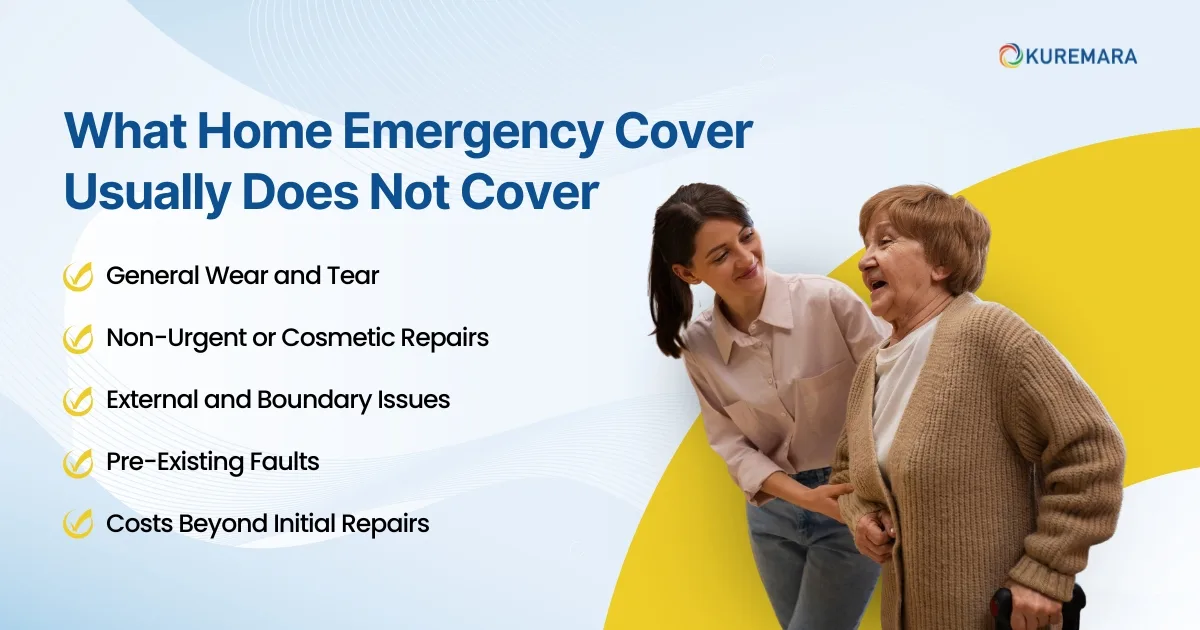
Understanding exclusions is just as important as knowing what is included. Many people assume emergency cover will fix any household issue, but its purpose is limited to urgent, safety-related situations only. Knowing these limits helps avoid frustration during stressful moments.
1. General Wear and Tear
Home emergency cover does not usually pay for problems caused by gradual deterioration over time. Ageing pipes, corroded wiring, worn seals, or appliances that have simply reached the end of their working life are typically excluded. These issues are considered maintenance responsibilities rather than emergencies.
2. Non-Urgent or Cosmetic Repairs
Issues that do not pose an immediate risk to health or safety are normally not covered. Examples include dripping taps, loose handles, cracked tiles, or minor leaks that can wait for routine repair. Emergency cover focuses on restoring essential services, not improving appearance or comfort.
3. External and Boundary Issues
Many policies exclude problems outside the main property boundary. This can include external drains, garden plumbing, fencing, garages, or shared systems in apartment buildings. Responsibility for these areas may sit with landlords, councils, or management companies instead.
4. Pre-Existing Faults
If a fault was present before the policy began, it is unlikely to be covered. Providers may also decline claims where issues show signs of long-term neglect. Regular inspections and servicing are important to ensure cover remains valid.
5. Costs Beyond Initial Repairs
Emergency cover often pays only for the initial call-out and temporary fix. Permanent repairs, replacement parts, or major works may require additional payment or a separate insurance claim.
By understanding these exclusions, older adults and families can plan realistically, combine emergency cover with routine maintenance, and avoid unexpected costs during already stressful situations.
Home Emergency Cover vs Routine Home Maintenance
* Understanding the Difference
Emergency cover is reactive. It responds when something suddenly goes wrong. Routine maintenance is proactive. It involves regular checks and servicing to prevent emergencies from happening in the first place.
* Why Both Matter for Older Adults
Combining emergency cover with regular maintenance reduces the frequency of urgent incidents. It also improves safety and reliability, especially in older properties.
How Home Emergency Cover Supports Independent Living
a. Reducing Health Risks and Anxiety
For older adults, household emergencies are more than just inconveniences. Loss of heating, electricity, or water can quickly lead to health risks such as hypothermia, dehydration, or increased risk of falls. Waiting hours or days for repairs can also cause significant anxiety and emotional distress. Home emergency cover helps by ensuring rapid response when something goes wrong, restoring essential services quickly and reducing exposure to unsafe living conditions. Knowing that help is available provides reassurance and peace of mind for both older adults and their families.
b. Supporting Ageing in Place
Remaining in a familiar home environment plays a vital role in maintaining independence, confidence, and emotional wellbeing. Sudden home emergencies can sometimes force temporary relocation or reliance on family support, which can be disruptive and stressful. Emergency cover supports ageing in place by addressing urgent issues promptly, helping older adults continue living safely and comfortably in their own homes without unnecessary upheaval.
c. When Extra Support Makes a Difference
While home emergency cover addresses urgent repairs, some situations require additional, hands-on support. During extended outages, mobility challenges, or recovery periods, having personal care and supervision can be just as important as fixing the problem itself. In these moments, services like live-in care can provide practical assistance, reassurance, and continuity of care, ensuring daily needs are met while the home environment is stabilised.
By combining emergency cover with the right care support, older adults can maintain independence with confidence, knowing both their home and personal wellbeing are protected when unexpected situations arise.
The Role of Home Care Providers During Emergencies
When Emergency Cover Alone Isn’t Enough
Even when repairs are underway, older adults may still need reassurance, physical help, or supervision. This is where home care providers play a vital role.
How Care Teams Respond
Care professionals can:
- Ensure the individual is safe and comfortable
- Assist with temporary routines if services are disrupted
- Communicate with family members
- Coordinate with tradespeople where needed
Providers like Kuremara support older adults not just during emergencies, but in daily living, offering continuity and reassurance when unexpected situations arise.
Choosing the Right Home Emergency Cover
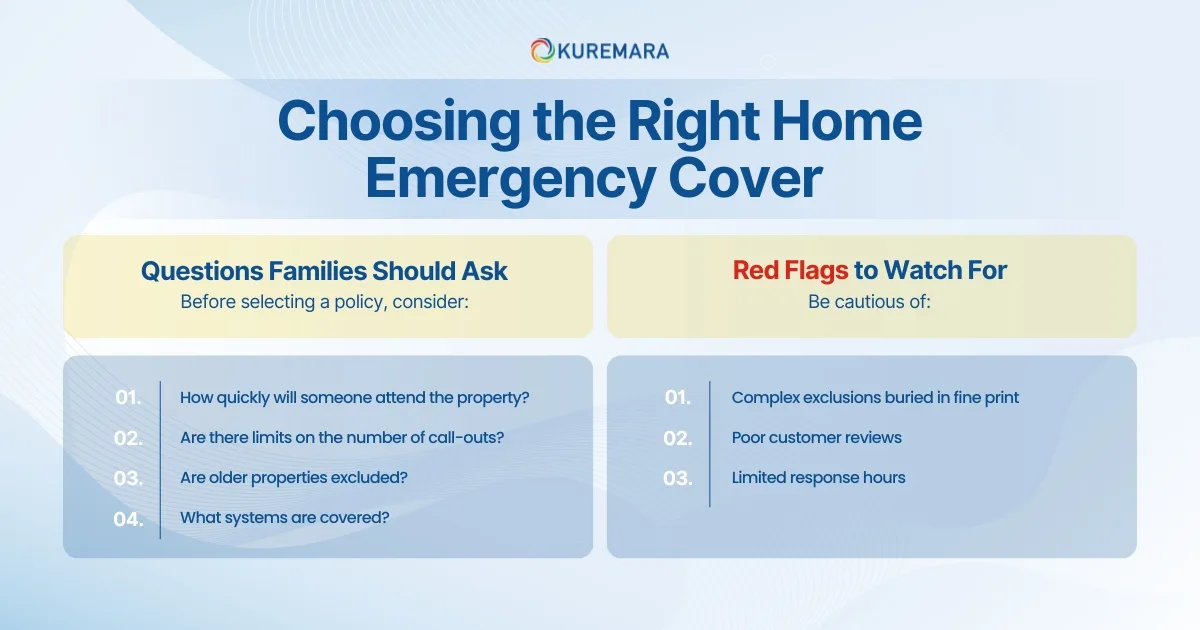
Questions Families Should Ask
Before selecting a policy, consider:
- How quickly will someone attend the property?
- Are there limits on the number of call-outs?
- Are older properties excluded?
- What systems are covered?
Red Flags to Watch For
Be cautious of:
- Complex exclusions buried in fine print
- Poor customer reviews
- Limited response hours
How Emergency Planning Fits Into Holistic Elder Care
Layering Support for Better Outcomes
Emergency cover works best when combined with home care services. While cover addresses the technical issue, care teams support the person through the disruption.
Planning Ahead Reduces Stress
Clear plans reduce panic during emergencies. Knowing who to call, what is covered, and who will provide personal support makes a significant difference.
How Kuremara Supports Older Adults Beyond Emergencies
Home emergencies are only one part of ageing safely at home. Kuremara provides person-centred home care services that support daily living, companionship, mobility, and wellbeing. Their approach focuses on dignity, continuity, and practical support that adapts to changing needs.
Whether it’s short-term assistance during an emergency or ongoing care that promotes independence, Kuremara works closely with individuals and families to ensure older adults feel safe, supported, and confident in their own homes.
Conclusion: Planning for Emergencies Without Fear
Home emergencies are unpredictable, but preparation makes them manageable. Understanding what home emergency cover includes and where its limits lie helps older adults and families plan confidently. When combined with reliable home care, emergency cover becomes part of a wider safety net that supports independence, wellbeing, and peace of mind.
By planning ahead and working with trusted providers, older adults can continue living safely at home, knowing that support is available when it matters most.