Mental health doesn’t just affect the person living with it, it ripples through entire families. When a loved one is struggling with anxiety, depression, dementia-related distress, or any other mental health condition, the people closest to them often carry an invisible weight of their own.
They become informal carers, emotional anchors, and problem-solvers, all at once frequently at the cost of their own wellbeing. Professional home care can make a profound difference, not just for the individual receiving support, but for the whole family unit.
Home Care Is About More Than Practical Tasks
Many families assume home care is primarily about physical assistance helping someone get dressed, managing medication, or preparing meals. While these are central to what home carers do, the emotional and psychological dimensions of care are equally important, especially when mental health is involved.
A trained home carer brings consistency and calm into what can feel like an unpredictable household. For someone experiencing depression or anxiety, a familiar, non-judgmental presence arriving each day provides one of the most powerful yet underestimated tools in mental health support.
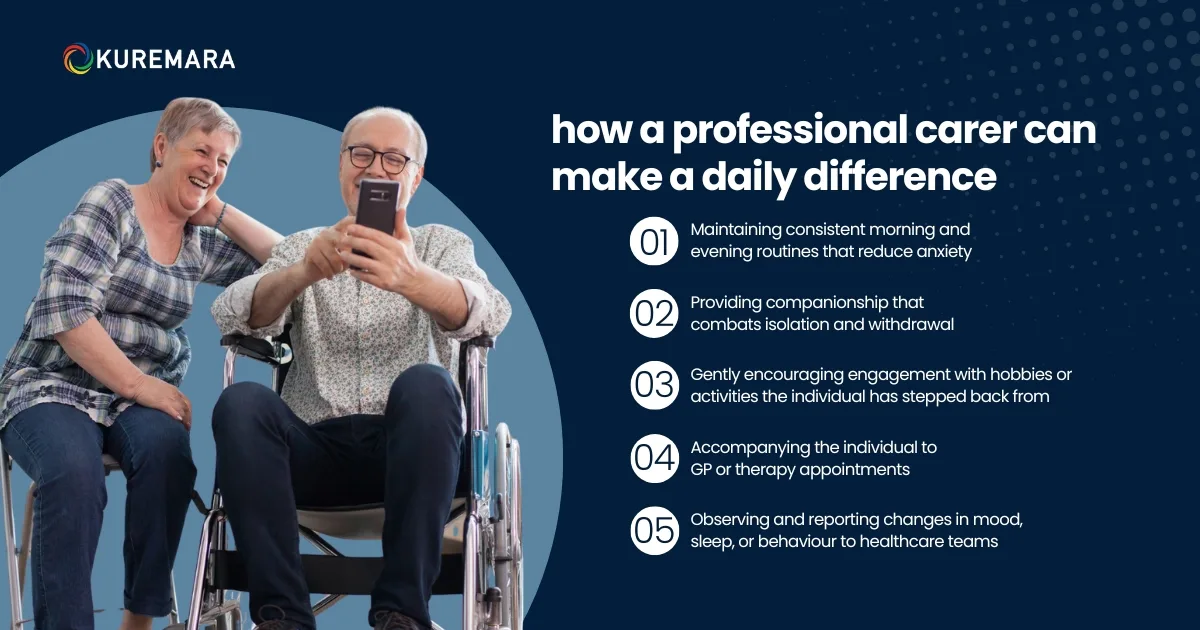
Here’s how a professional carer can make a daily difference:
- Maintaining consistent morning and evening routines that reduce anxiety
- Providing companionship that combats isolation and withdrawal
- Gently encouraging engagement with hobbies or activities the individual has stepped back from
- Accompanying the individual to GP or therapy appointments
- Observing and reporting changes in mood, sleep, or behaviour to healthcare teams
Relieving the Burden on Family Carers
One of the most common and least talked-about consequences of caring for someone with a mental health condition is carer burnout. According to Carers UK, over 72% of carers report experiencing mental health problems themselves as a direct result of their caring role. Exhaustion, isolation, and persistent guilt for simply wanting a break are far more common than most families admit.
Professional home care creates meaningful respite. It gives a spouse, adult child, or sibling the space to step back to sleep properly, to work, to spend time with their own children, or simply to remember who they are outside the caring role.
This is not abandonment. It is sustainability and it makes you a better carer in the long run.
Protecting Children in the Household
When a parent or grandparent is living with a mental health condition, children in the home can be quietly and significantly affected. They may sense the tension, witness difficult episodes, or take on caring responsibilities well beyond their years. This is known as young caring, a reality for an estimated 800,000 young people across the UK.
Having a professional home carer present can help in several important ways:
- Shields children from the weight of adult caring responsibilities
- Keeps daily routines — school preparation, mealtimes, bedtime, stable and predictable
- Models healthy help-seeking behaviour for younger family members
- Reduces the emotional unpredictability that children absorb in affected households
Care That Adapts to the Individual
No two mental health journeys look the same. A person managing bipolar disorder has different needs on different days. Someone with early-stage dementia may feel sharp in the morning but confused and anxious by evening. A young adult recovering from a crisis needs encouragement, not pity.
Good home care is flexible by design. At Kuremara, our carers work alongside families and healthcare professionals to adapt support as needs change whether that means being a gentle conversational companion, assisting with medication, or simply sitting quietly when words aren’t what’s needed.
Bridging Everyday Life and Clinical Care
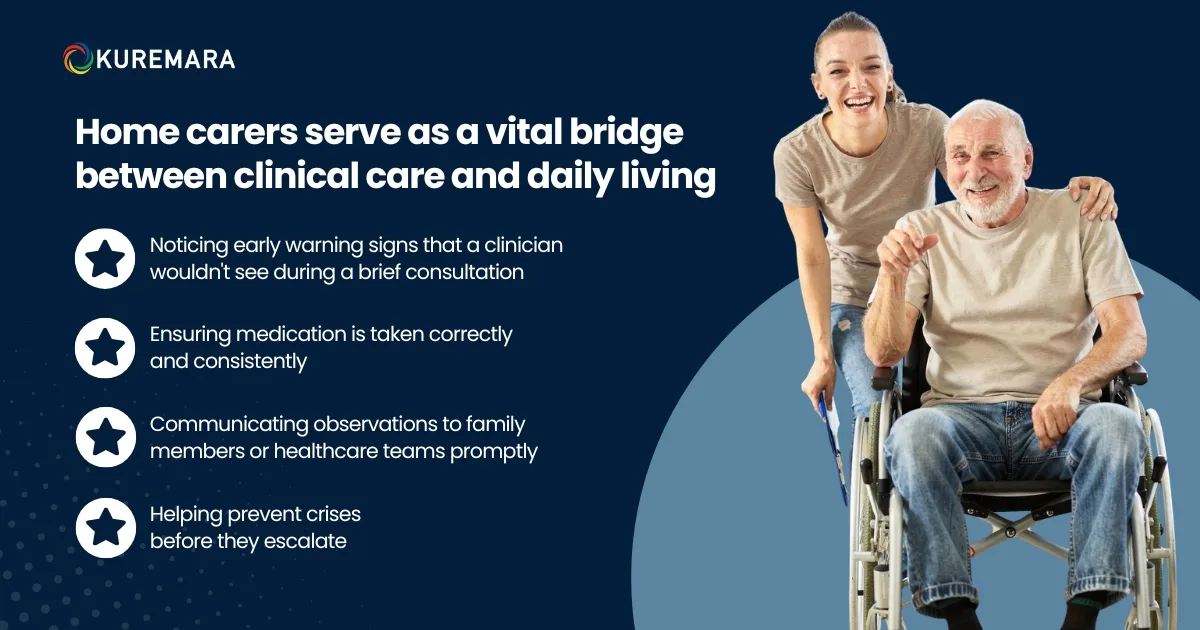
Mental health treatment in the UK typically involves a combination of GP support, therapy, and medication but appointments are infrequent. The hours in between are where real life happens, and that’s exactly where home care proves its value.
Home carers serve as a vital bridge between clinical care and daily living by:
- Noticing early warning signs that a clinician wouldn’t see during a brief consultation
- Ensuring medication is taken correctly and consistently
- Communicating observations to family members or healthcare teams promptly
- Helping prevent crises before they escalate
This level of attentive, everyday observation is genuinely life-changing for many families.
A Conversation Worth Starting
If your family is navigating a loved one’s mental health challenges, reaching out for support isn’t a sign that you’ve failed. It’s a sign that you understand the depth of what you’re dealing with and that you’re committed to getting it right.
At Kuremara, we work with families across the UK to provide compassionate, person-centred home care that acknowledges the emotional complexity of each situation. Whether you need a few hours of support each week or more intensive daily care, we’re here to listen first, and build a care plan that truly fits your family’s life.
You don’t have to carry this alone. We’re here when you’re ready.