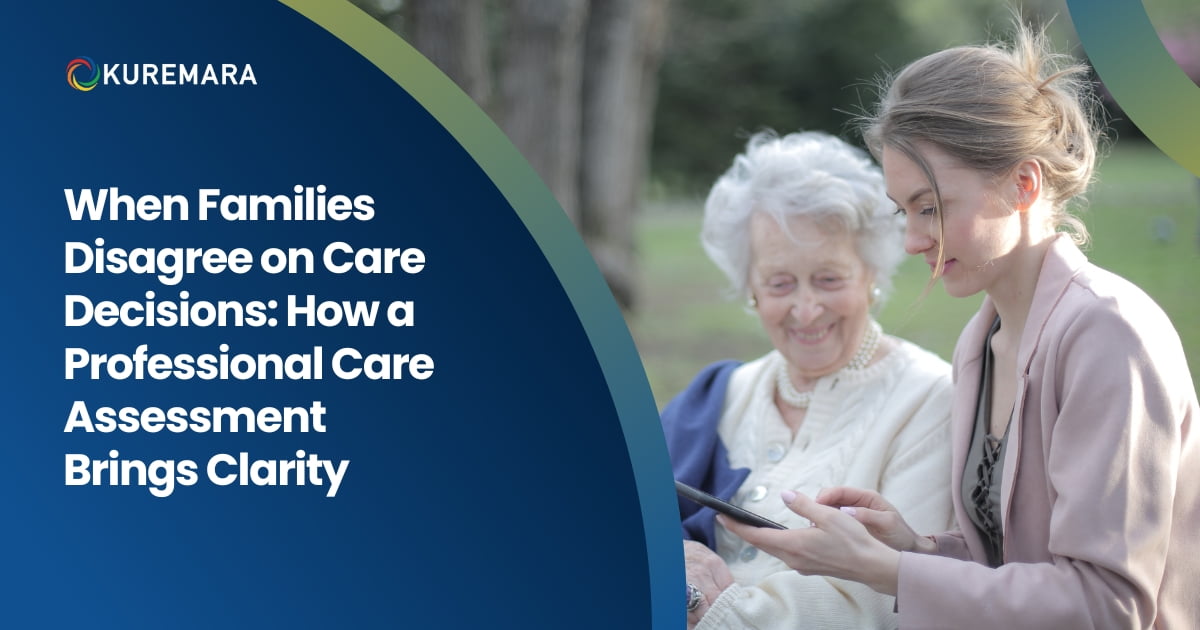
Caring for a loved one is rarely simple, and when family members hold different views on what’s best, emotions can run high. Whether it’s questions about live‑in support, more hourly visits, or specialist overnight care, disagreements can make an already stressful situation feel even more overwhelming.
That’s where a professional care assessment can make all the difference. With clear recommendations and a person‑centred approach, assessments help families move from uncertainty to confidence, ensuring that decisions are based on actual needs, not assumptions or conflicts.
In this post, we’ll explore how professional care assessments work, why they’re so valuable during family disagreements, and how Kuremara’s expert care team supports families in planning compassionate, practical care at home.
Why Families Often Disagree About Care Decisions
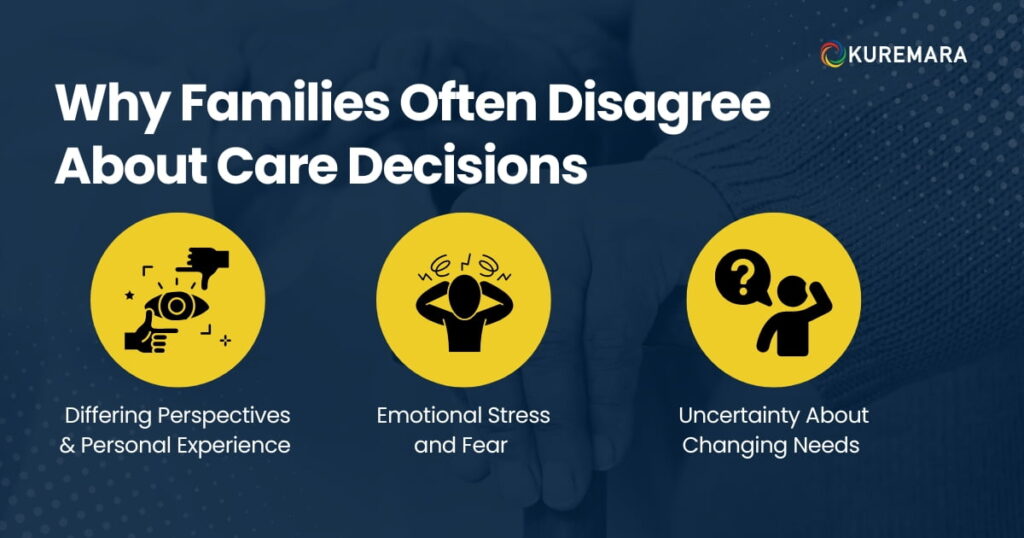
1. Differing Perspectives and Personal Experience
Everyone in a family sees things differently. One sibling might focus on safety risks, another on independence or cost, and a third on emotional support needs. These varying priorities can lead to heartfelt disagreements about what kind of care is truly right.
2. Emotional Stress and Fear
Care discussions often come at emotionally charged times such as after a hospital stay or worsening health conditions. Strong feelings like fear, guilt, worry, and even frustration are common, and these can cloud judgment and escalate conflict.
3. Uncertainty About Changing Needs
The needs of someone requiring care don’t always stay the same. Conditions like dementia, mobility changes, or post‑surgery recovery evolve over time — and what seems right today might not be enough tomorrow. This uncertainty adds to family tension.
What Is a Professional Care Assessment?
A professional care assessment is a structured evaluation carried out by a qualified care professional. The goal is to build a clear and unbiased understanding of someone’s care needs, including physical, emotional, social, and lifestyle considerations.
In the UK, public social care needs assessments are typically arranged through local councils and are free of charge. They examine how someone manages everyday tasks like washing, dressing, preparing food, mobility, and more.
But assessments can also be conducted privately by experienced home care providers like Kuremara. These focus more closely on personalised care planning that supports independent living at home while aligning with family priorities and preferences.
How a Professional Care Assessment Brings Clarity
1. Establishes a Shared Understanding of Needs
One of the biggest benefits of a care assessment is that it creates an objective baseline. Instead of relying on everyone’s opinions, families can review facts collected by an expert who has worked with many people in similar situations.
This helps shift conversations away from “I think…” and towards “The assessment says…” — making decision‑making much smoother.
2. Reduces Emotional Conflict
When a neutral professional guides the conversation, it can lower emotional tension. Care assessments focus on what the person needs rather than family fears or assumptions — which helps everyone stay grounded and aligned.
3. Encourages Better Communication and Planning
A care assessment not only highlights current needs but also prompts discussions about future changes and supports. Families can plan proactively, reducing stress, and avoiding rushed decisions in emergencies.
The Role of Kuremara’s Professional Care Assessments
At Kuremara, we understand that navigating care decisions involves both emotional and practical challenges. That’s why our care assessment process is designed to be:
1. Person‑Centred
We focus on the individual their routines, preferences, goals and wellbeing not just the care tasks. This aligns with the principles of modern, person‑centred care that promotes dignity and independence.
2. Thorough and Insightful
Our assessments look at all aspects of daily living and support from mobility and safety to social needs and companionship. By building a full picture of what’s needed, we help families feel confident in planning care that truly fits.
3. Tailored to Your Family’s Situation
Whether you’re considering live‑in care, respite breaks, complex care, overnight support, hourly visiting care or companionship care, Kuremara’s professional recommendations help you choose the services that best support quality of life.
4. Continually Reviewed
Care needs change and so should the care plan. Regular reassessments ensure that the services in place are still the right fit as circumstances evolve.
Practical Steps for Families Facing Disagreements
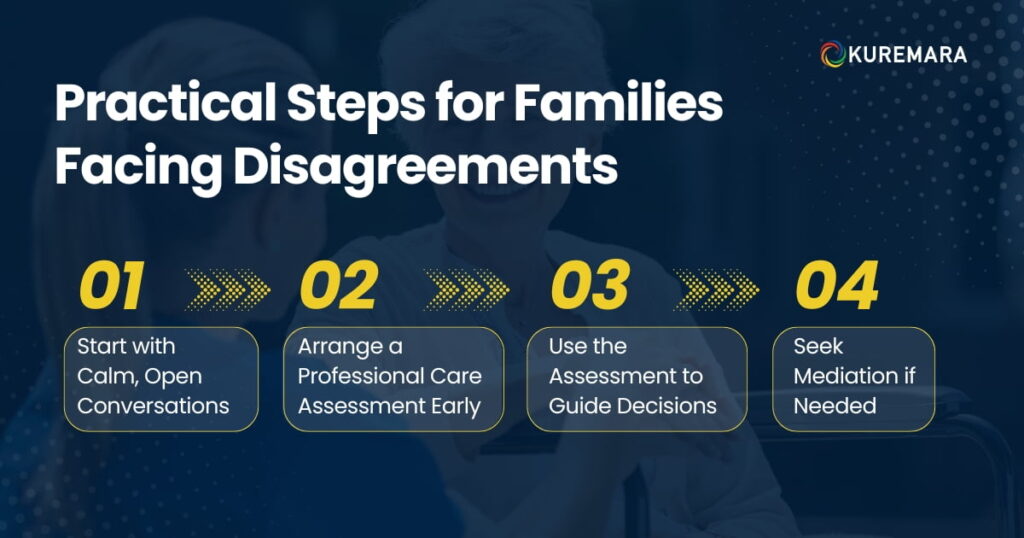
Here are a few actionable steps to help families move forward when care decisions feel overwhelming:
- Start with Calm, Open Conversations – Invite everyone to express their hopes, worries, and expectations without judgment.
- Arrange a Professional Care Assessment Early – Don’t wait until a crisis forces a choice. An early assessment provides clarity and frames the conversation around facts.
- Use the Assessment to Guide Decisions – Once you have the results, revisit care options with everyone focusing on the assessed needs rather than personal opinions.
- Seek Mediation if Needed – If disagreements linger, a neutral mediator or care professional can help families work through differences respectfully.
Conclusion
When families disagree on care decisions, it’s often because emotions, uncertainty, and differing perspectives make it hard to see the full picture. A professional care assessment acts as a compass guiding families toward clarity, alignment, and better care planning.
At Kuremara, we’re here to support you every step of the way, helping you understand care needs, explore options, and put together a care plan that enhances wellbeing and peace of mind at home.
Ready to Get Clarity on Care?
Speak with Kuremara today about arranging a professional care assessment tailored to your family’s unique situation. Let’s work together to find the best care solution for your loved one with confidence, compassion, and clarity.
Contact Kuremara to begin your care assessment and step forward with confidence.