When it comes to caring for a loved one, “good” home care isn’t just a nice-to-have; it’s essential. Families want peace of mind knowing that their loved ones are safe, respected, and supported every single day. But here’s the tricky part: how do you actually define good care?
At first glance, many home care providers may seem similar. They offer assistance with daily tasks, companionship, and support. However, true quality goes far deeper than ticking boxes. It’s about consistency, accountability, compassion, and professional standards working together seamlessly.
Understanding what sets high-quality care apart helps families make informed decisions. It also ensures that care recipients receive not just help, but dignity, independence, and a better quality of life.
Understanding Quality in Home Care Services
Quality home care is built on more than just completing tasks. It focuses on the overall well-being of the individual.
1. Safety, Dignity, and Independence
At its core, good care protects safety while promoting independence. Carers should support individuals without taking away their sense of control. Respecting dignity, whether during personal care or daily routines, is non-negotiable.
2. Consistency vs Convenience
It might be tempting to prioritise quick availability, but consistency is far more valuable. Seeing the same carer regularly builds trust and reduces confusion. Familiarity leads to better communication and stronger relationships.
The Role of Training in Delivering Excellent Care
Training is the backbone of quality care. Without it, even well-meaning carers may fall short.
a. Initial Training and Certification Standards
Every professional carer should begin with structured training. This includes:
- Basic care skills
- Health and safety procedures
- Safeguarding awareness
- Communication techniques
Proper onboarding ensures carers are prepared before they step into someone’s home.
b. Ongoing Learning and Skill Development
Care needs evolve, and so should carers’ skills. Continuous training helps staff stay updated on best practices, new health guidelines, and specialized care techniques.
c. Competency Checks and Evaluations
Training alone isn’t enough regular competency checks are essential. These assessments ensure carers consistently meet expected standards. Providers who conduct routine evaluations demonstrate a commitment to accountability and improvement.
Standards That Define Reliable Home Care
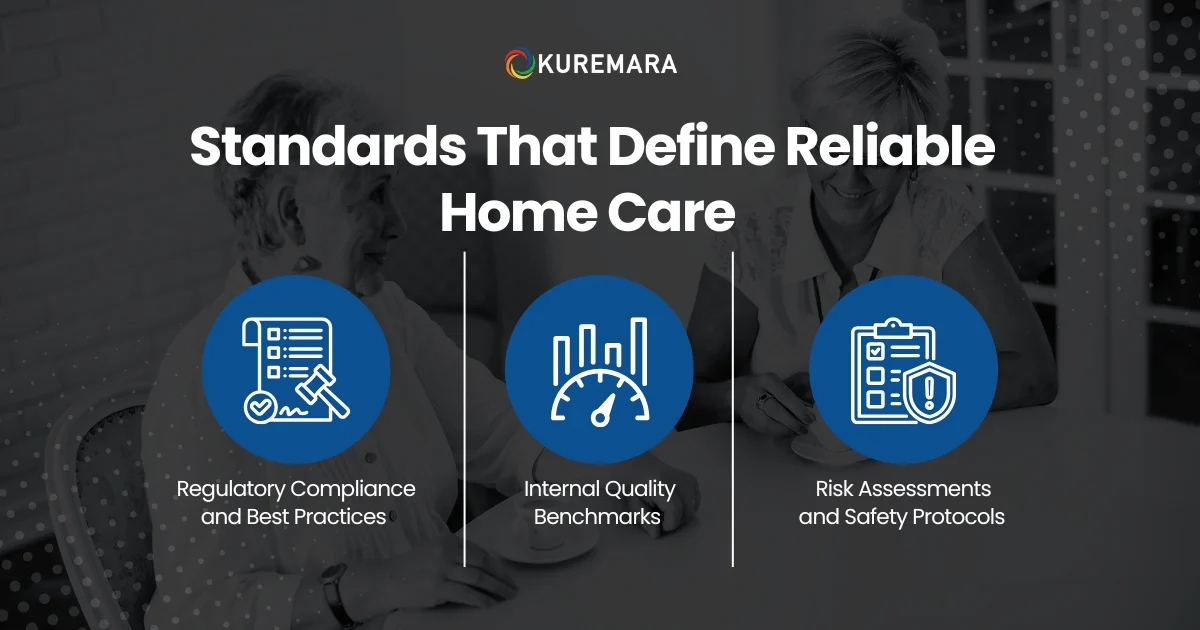
Reliable home care providers follow structured standards that guide every aspect of service delivery.
1. Regulatory Compliance and Best Practices
In the UK, providers are expected to meet strict regulatory requirements. These standards ensure safety, ethical practices, and proper care delivery. Families should always check if a provider adheres to recognized guidelines.
2. Internal Quality Benchmarks
Beyond regulations, strong providers set their own internal benchmarks. These may include service audits, performance reviews, and client feedback systems.
3. Risk Assessments and Safety Protocols
Risk assessments are a critical part of care planning. They identify potential hazards and outline preventive measures. This proactive approach minimizes risks and enhances safety at home.
Continuity of Care: Why Familiar Faces Matter
Continuity is one of the most important but often overlooked aspect of quality care.
* Building Trust Through Familiarity
When clients see the same carers regularly, trust develops naturally. This trust improves cooperation and makes care more effective.
* Reducing Errors and Miscommunication
Consistent carers are more familiar with routines, preferences, and health conditions. This reduces mistakes and ensures smoother care delivery.
* Matching Carers with Clients
Good providers don’t assign carers randomly. They carefully match carers based on:
- Personality
- Skills
- Client needs
- Cultural preferences
This thoughtful pairing creates stronger connections and better outcomes.
Monitoring Quality Behind the Scenes
High-quality care doesn’t happen by chance; it’s actively monitored and maintained.
1. Spot Checks and Supervisory Visits
Unannounced spot checks allow supervisors to observe care in real time. These checks ensure standards are being followed consistently.
2. Care Plan Reviews and Updates
Care plans should never remain static. Regular reviews ensure they reflect the client’s current needs. Adjustments are made as conditions change.
3. Family Communication and Updates
Transparent communication keeps families informed and involved. Regular updates build trust and allow for quick adjustments when needed.
Signs of High-Quality Home Care
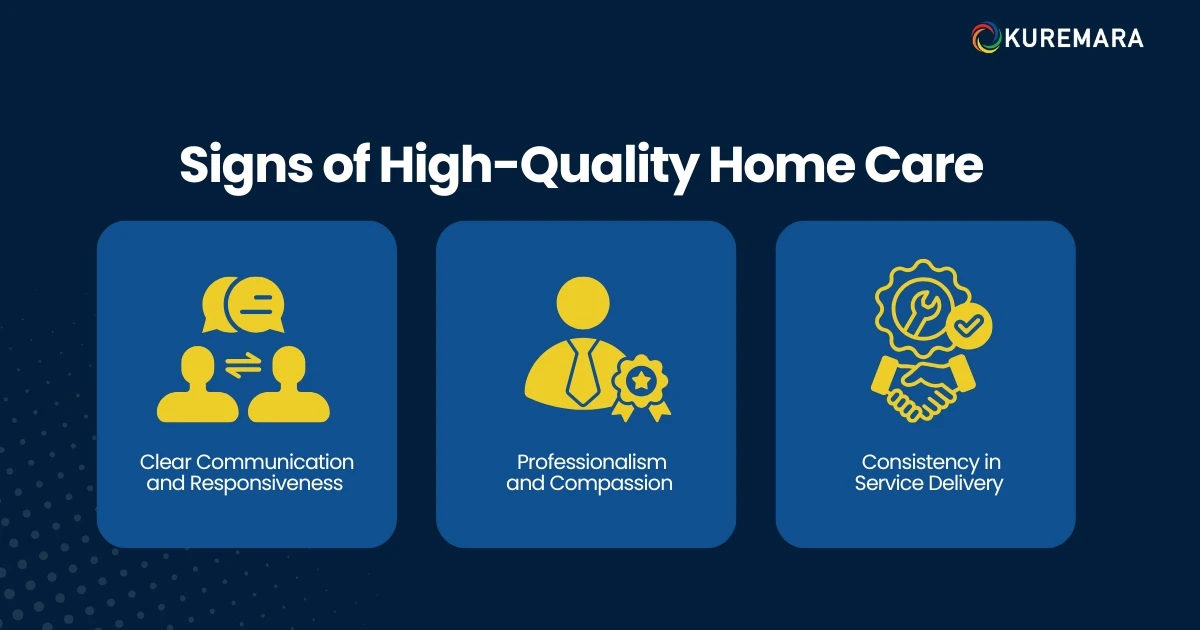
So, what should families actually look for?
a. Clear Communication and Responsiveness
Good providers respond quickly and communicate clearly. They keep families informed and address concerns promptly.
b. Professionalism and Compassion
The best carers balance professionalism with genuine empathy. They’re skilled, but also kind and understanding.
c. Consistency in Service Delivery
Reliable scheduling and familiar carers are strong indicators of quality. Consistency shows strong internal organization and commitment.
Red Flags: Warning Signs of Poor Care
Knowing what to avoid is just as important.
* High Staff Turnover
Frequent changes in carers can disrupt care and indicate deeper issues within the provider.
* Poor Communication
Missed calls, unclear updates, or lack of responsiveness are major warning signs.
* Lack of Structured Processes
If there are no clear care plans, reviews, or checks, quality cannot be guaranteed.
A Practical Checklist to Evaluate Home Care Quality
Here’s a simple checklist families can use:
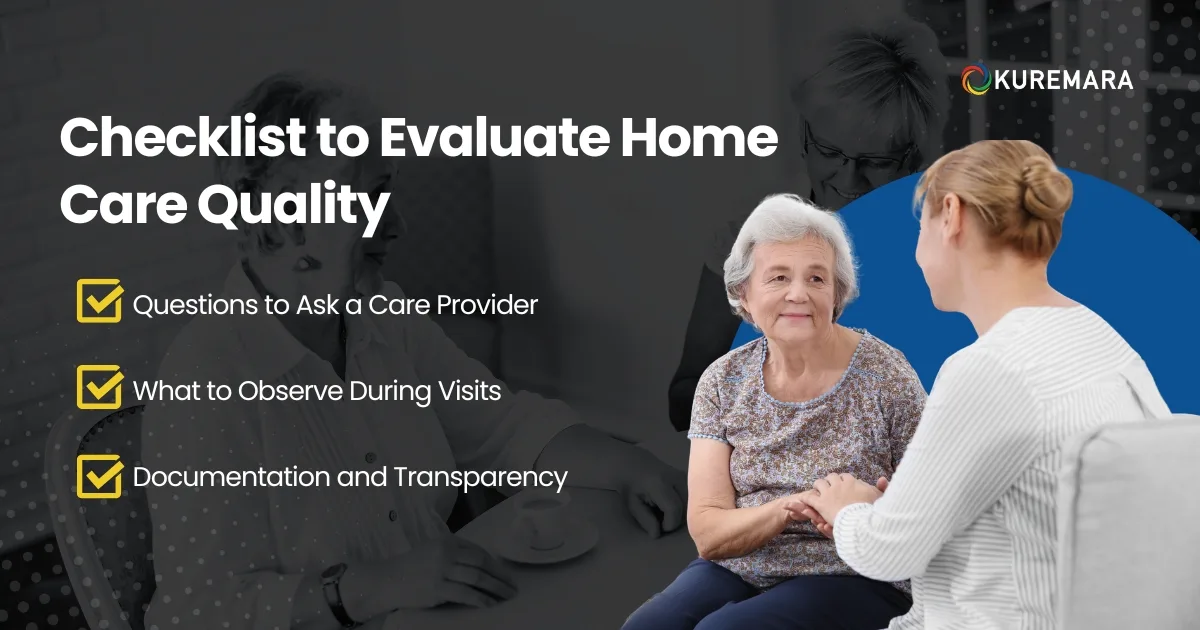
Questions to Ask a Care Provider
- How are carers trained and assessed?
- How often are care plans reviewed?
- Will we have consistent carers?
- How do you communicate updates?
What to Observe During Visits
- Is the carer respectful and attentive?
- Are routines followed consistently?
- Does the client seem comfortable?
Documentation and Transparency
- Clear care plans
- Regular reports
- Open communication channels
You can also explore general care standards from trusted sources like the Care Quality Commission (CQC)
How Kuremara Maintains High Standards
Providers like Kuremara focus on maintaining quality through structured systems and a people-first approach. Their emphasis is not just on delivering care, but on ensuring that care remains consistent, safe, and responsive over time.
Commitment to Training and Development
Kuremara prioritizes comprehensive training and continuous learning. This ensures carers are always equipped with the skills needed to provide high-quality support.
Ensuring Continuity and Trust
By focusing on consistent carer assignments, Kuremara helps build strong relationships between carers and clients, enhancing comfort and trust.
Transparent Communication with Families
Regular updates and open communication channels ensure families are always informed and involved in care decisions.
The Long-Term Impact of Quality Home Care
Quality care doesn’t just meet immediate needs, it creates lasting benefits.
a. Improved Wellbeing and Safety
Proper care reduces risks, improves health outcomes, and supports emotional wellbeing.
b. Peace of Mind for Families
Families can relax knowing their loved ones are in capable, caring hands.
Conclusion: Choosing Care with Confidence
Choosing home care is a deeply personal decision. While it can feel overwhelming, understanding what “good” looks like makes the process much clearer.
By focusing on training, standards, and continuity, families can confidently evaluate providers and ensure their loved ones receive the care they deserve. Remember, quality care isn’t just about services; it’s about trust, consistency, and genuine human connection.