
Deciding that a loved one needs extra support at home is rarely a simple moment. It often arrives gradually: a missed medication, a fall, a parent who no longer feels safe cooking, or a family member recovering from surgery who needs a steadier hand for a while. Whatever brings you here, one thing is certain: you want the very best for the person you care about.
The good news is that home care allows your loved one to stay in the place they know and love, surrounded by their own memories, routines and comforts, while receiving the support they need. The challenge is knowing how to choose a provider you can genuinely trust.
With so many agencies and options available across the UK, the decision can feel overwhelming. This guide walks you through exactly what to look for, the questions to ask, and the warning signs to avoid. We’ve also created a free, downloadable checklist you can print and take to meetings so you can compare providers with complete confidence.
Why Choosing the Right Provider Matters
A home care provider does not simply “deliver a service.” They become part of your loved one’s daily life. The right provider protects dignity, encourages independence, and gives your whole family peace of mind. The wrong one can lead to inconsistent care, poor communication, and unnecessary worry.
Getting this decision right means your loved one receives compassionate, reliable support tailored to their needs and you gain the reassurance of knowing they are in safe hands.
Step 1: Understand the Type of Care You Need
Before comparing providers, it helps to be clear about what kind of support is actually required. Home care is not one-size-fits-all, and identifying the right level of care early will save you time and help you ask sharper questions.
Common types of home care include:
- Personal care — help with washing, dressing, grooming, toileting and mobility.
- Domiciliary (visiting) care — carers visit at scheduled times during the day to assist with daily tasks.
- Live-in care — a carer lives in the home to provide round-the-clock support.
- Respite care — short-term cover that gives family carers a much-needed break.
- Companionship care — emotional support, conversation and help reducing loneliness and isolation.
- Specialist care — tailored support for conditions such as dementia, Parkinson’s, stroke recovery or palliative needs.
Take a moment to think about your loved one’s daily routine, their health conditions, and where they struggle most. Are the needs likely to increase over time? A good provider should be able to adapt as circumstances change.
Step 2: Check They Are CQC Registered and Regulated
In England, all home care providers delivering personal care must be registered with the Care Quality Commission (CQC), the independent regulator of health and social care. (In Wales, this is Care Inspectorate Wales; in Scotland, the Care Inspectorate; and in Northern Ireland, the RQIA.)
CQC registration is not optional, and it is one of the most important boxes to tick. It means the provider is legally accountable and subject to inspection against strict standards of safety and quality.
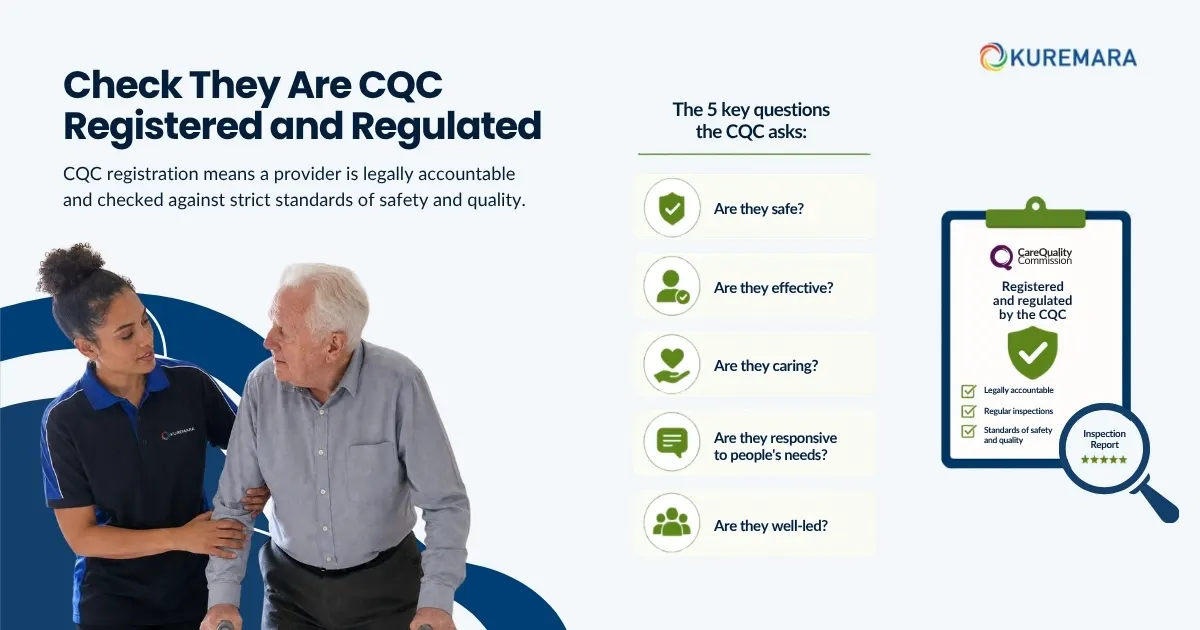
When researching a provider, look for their latest inspection report and check how they perform across the five key questions the CQC asks:
- Are they safe?
- Are they effective?
- Are they caring?
- Are they responsive to people’s needs?
- Are they well-led?
A strong rating is reassuring, but don’t stop at the headline. Read the detail of the report to understand the provider’s strengths and any areas they have been asked to improve. As a CQC registered provider, Kuremara welcomes this transparency it is the foundation of trustworthy care.
Step 3: Look at Experience, Training, and Staff Quality
Care is only ever as good as the people delivering it. The qualifications, training, and values of the care team make all the difference to your loved one’s experience.
When assessing a provider’s team, find out:
- What training do carers receive before they begin, and how often is it refreshed?
- Whether staff are trained in specialist areas relevant to your loved one (for example, dementia or moving and handling).
- How carers are vetted, including enhanced DBS (background) checks and reference verification.
- Whether you can expect consistency, ideally a small, regular team rather than a different face every visit.
Consistency matters enormously, especially for older people and those living with memory conditions. Familiar carers build trust, spot subtle changes in wellbeing, and provide care that feels personal rather than transactional.
Step 4: Make Sure Care Is Personalised
No two people are the same, and care should never be generic. The best providers take time to understand the whole person, not just their medical needs, but their history, preferences, routines, and the things that bring them joy.
A quality provider will:
- Carry out a thorough assessment before care begins.
- Create a personalised care plan built around your loved one’s needs and wishes.
- Involve your loved one (and the family) in decisions about their own care.
- Review and update the plan regularly as needs change.
Person-centred care respects independence and dignity. It is about supporting your loved one to live the life they want, in the way they want, for as long as possible.
Step 5: Assess Communication and Family Involvement
When you cannot be there every day, clear and open communication becomes a lifeline. You need to feel confident that you will be kept informed and that concerns will be addressed quickly.
Ask how the provider keeps families updated. Many now use digital care apps that let relatives see visit notes, medication records, and updates in real time, a wonderful source of reassurance. Find out who your main point of contact will be and how to reach them, including outside office hours in an emergency.
A provider who communicates openly is usually one who has nothing to hide.
Step 6: Understand the Costs Clearly
Cost is an unavoidable part of the decision, and clarity here protects you from unwelcome surprises later. A reputable provider will be transparent about pricing from the outset.
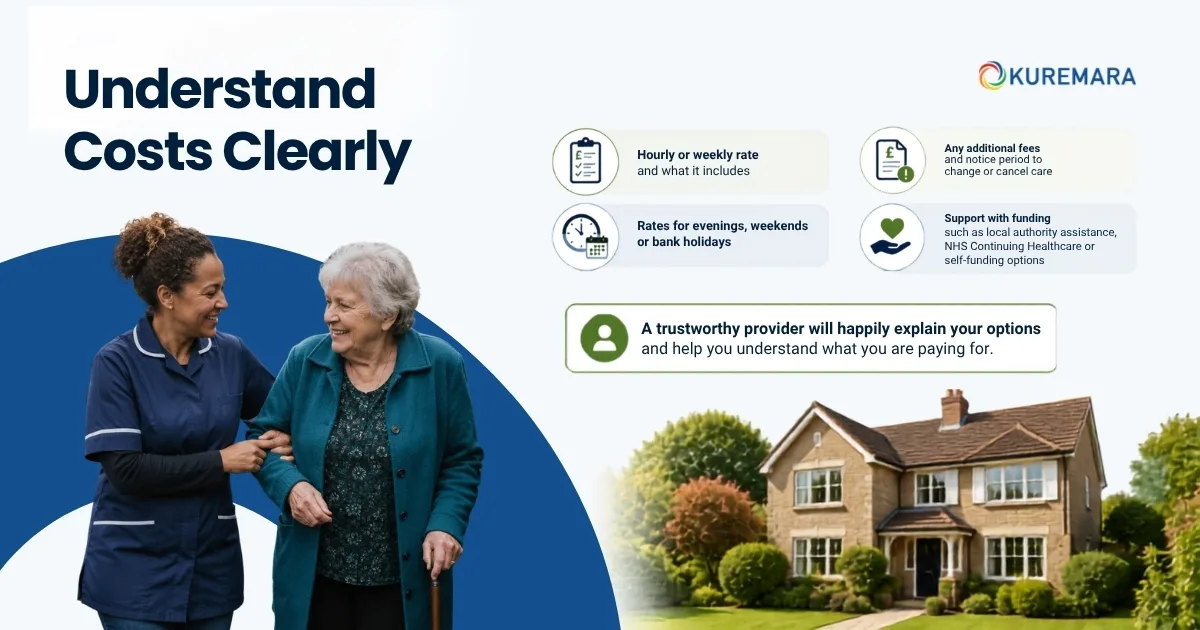
Before committing, make sure you understand:
- The hourly or weekly rate, and exactly what it includes.
- Whether rates differ for evenings, weekends, or bank holidays.
- Any additional fees and the notice period required to change or cancel care.
- What support is available regarding funding, such as local authority assistance, NHS Continuing Healthcare or self-funding options?
A trustworthy provider will happily explain your options and help you understand what you are paying for, never pressuring you into decisions.
Step 7: Read Reviews and Ask for Recommendations
Real experiences from other families offer invaluable insight. Look beyond the provider’s own website to independent review platforms, and don’t underestimate word of mouth from your GP, social worker, or people in your community.
When reading reviews, look for recurring themes, comments about reliability, kindness, communication, and how the provider responds when things go wrong. Occasional criticism is normal; how a provider responds to it tells you a great deal about their character.
Download Your Free Home Care Provider Checklist
To make your decision easier, we’ve put everything into a simple, printable checklist you can use as you compare providers. It covers regulation and safety, care quality, staff and consistency, communication, costs and reputation plus the key questions to ask in every meeting.
📄 [Download the Kuremara Home Care Provider Checklist (PDF)] print it out, take it with you, and simply tick as you go. The more boxes a provider ticks, the more confident you can feel in your choice.
Tip: Keep a separate copy for each provider you visit. Comparing your completed checklists side by side makes the right choice far clearer.
Here’s a quick look at what the checklist helps you confirm:
- Regulation & safety — CQC registration, a positive inspection report, enhanced DBS checks and proper insurance.
- Care quality — the right type of care, specialist support if needed, a thorough assessment and a personalised care plan.
- Staff & consistency — well-trained carers and a small, familiar team.
- Communication — a clear point of contact, regular updates and out-of-hours support.
- Costs & flexibility — transparent pricing, no hidden fees and room to adapt as needs change.
- Reputation — strong independent reviews and trusted recommendations.
Warning Signs to Watch Out For
While most providers are caring and professional, it pays to stay alert. Be cautious if you notice:
- No CQC registration, or an inspection report, the provider is reluctant to share.
- Vague or evasive answers about staff training and background checks.
- High staff turnover and constantly changing carers.
- Pressure to sign quickly or commit to long contracts.
- Hidden costs or unclear pricing.
- Poor communication, or difficulty reaching anyone when you call.
Trust your instincts. If something feels wrong, it is always worth pausing and asking more questions.
Making the Final Decision
Once you have done your research, trust both the facts and your feelings. The right provider will combine professionalism and proper regulation with genuine warmth and compassion. Your loved one should feel comfortable, respected, and safe, and you should feel reassured every step of the way.
Take your time, ask plenty of questions, and don’t be afraid to meet more than one provider before deciding. This is an important choice, and you deserve to feel completely confident in it.
How Kuremara Can Help
At Kuremara, we understand that inviting care into your loved one’s home is a deeply personal decision built on trust. As a CQC-registered home care provider, we are committed to delivering safe, compassionate and truly person-centred care across the UK.
Our experienced and carefully vetted carers provide everything from personal and companionship care to specialist support, always tailored to the individual and always delivered with dignity and kindness. We believe in open communication, consistent care teams, and treating every person we support as we would our own family.
If you would like to talk through your loved one’s needs, our friendly team is here to listen, answer your questions, and guide you with no pressure and no obligation.